
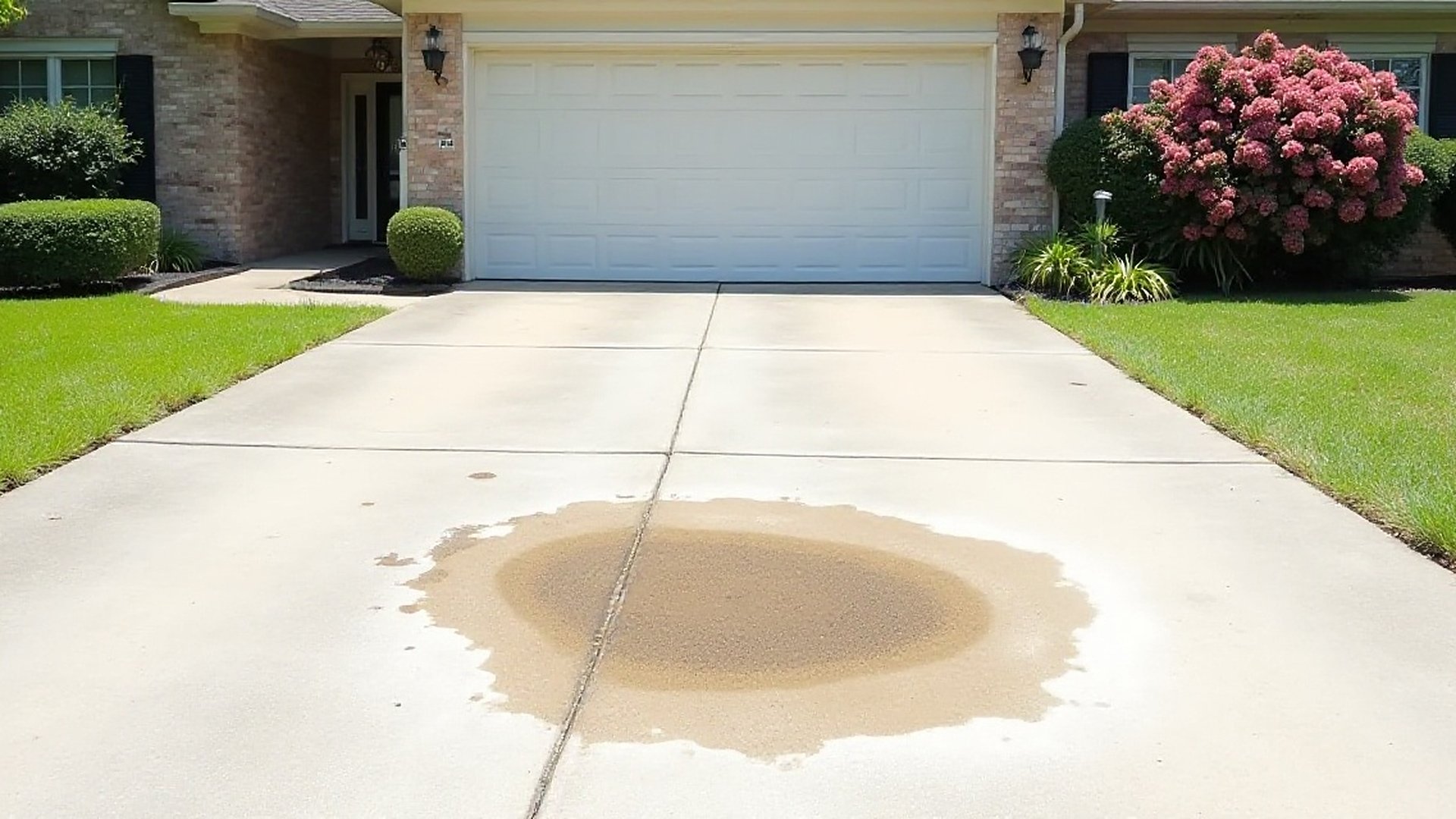
Oil stain removal on a driveway is less about force and more about chemistry and patience. Concrete is full of tiny pores, and oil, rust and fertilizer residue settle into them. A good company identifies the stain first, treats it with a product meant for that stain, and only then rinses.
Houston Power Washing Pro does not treat stains. It runs a free phone line at (832) 662-4107. Say what kind of marks you have and where, and an automated assistant puts the call through to an independent local company that handles concrete cleaning. That company inspects the stains, gives you its own price and is paid by you directly.
Identify your stain before anyone touches it
Rust stain removal on concrete and oil stain removal on a driveway use opposite kinds of products. Getting the type right is the single biggest factor in how well the job turns out.
| Stain | What it looks like | Usual cause | What a careful company does | Realistic result |
|---|---|---|---|---|
| Fresh oil drip | Dark, glossy, still tacky or wet | A leaking car or mower parked in the same spot | Soaks up the free oil, then applies a concrete degreaser and scrubs it in | Often clears well when caught early |
| Old, set oil | Flat dark patch with a soft halo | Months or years of drips sinking into the slab | Uses a poultice or a microbial cleaner and may need more than one visit | Usually lighter, sometimes still visible |
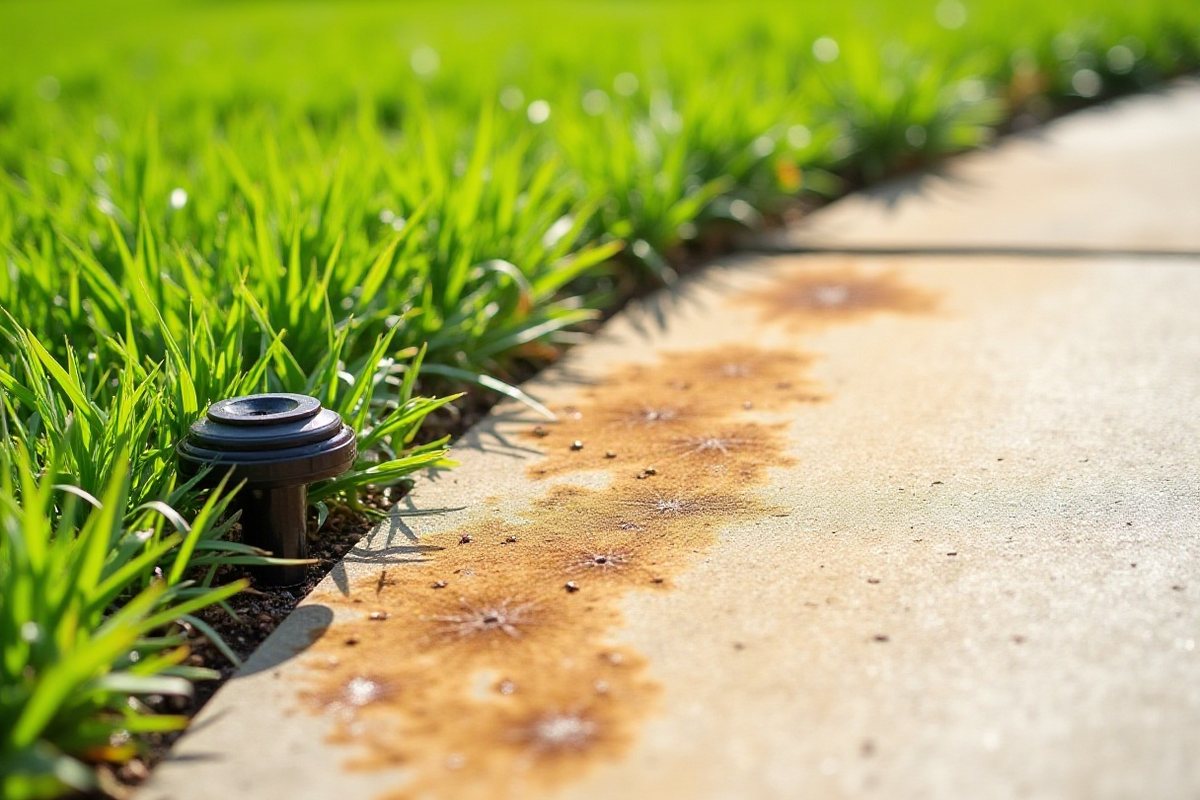
| Orange sprinkler fan | Rust-colored arcs or fans along the edge of the slab | Irrigation water with high iron content, often from a well | Applies a rust remover made for concrete after testing a small spot | Good, but returns if the water does not change |
| Fertilizer rust | Orange freckles or a speckled band near the lawn | Iron-containing fertilizer granules that got wet on the concrete | Treats with a rust remover, then rinses the whole panel evenly | Good, as long as granules are swept off next time |
| White powder | Chalky white film or crust | Efflorescence: salts carried up through damp concrete | Explains that it is a moisture issue, not dirt, and may treat it | Can reappear while the slab stays damp |
Other marks, such as a brown leaf outline under a tree or a ring where a planter sat all summer, are worth pointing out on the call. The company can tell you whether they need their own treatment or will lift with a normal wash.
Why pressure alone fails on oil
Oil does not sit on top of concrete. It wicks down into the pores, and the deeper it goes, the less a spray can reach it. Blasting the spot cleans the top layer, so the stain looks better for a while. Then oil still in the slab works back toward the surface and the mark reappears. Repeated hard blasting can also rough up the surface, which leaves it more open to the next spill.
Concrete Network lists the tools that do reach deeper oil: strong detergents, concrete degreasers, poultices that draw oil up as they dry, and microbial cleaners that break the oil down. It also points out the limit. Typical degreasers loosen oil but do not break it down, which is why an old, heavy stain may end up lighter rather than gone.
Rust stain removal on concrete
Rust stains are iron that has oxidized on the surface, so they ignore degreasers and need an acid-based rust remover made for concrete. Concrete Network describes oxalic acid as the classic choice for this. Acids can also change the color or texture of the surface if they are misused, which is why a careful company tests a small, out-of-the-way spot first and rinses thoroughly afterward.
Around Houston, the orange fans along the edge of a driveway or walk usually trace back to sprinklers. Concrete Network names irrigation water with high iron content as a common cause, especially from wells. Many homes on acreage outside towns like Tomball water from private wells, so if your stains line up with sprinkler heads, the well is the first thing to ask about. Iron-containing fertilizer is the other common source.
What to expect from stain work
Honest companies set expectations before they start. Ask for one of these three answers for each stain, and be wary of anyone who promises the first one for everything without looking.
- "It should come out." Fresh oil, most fertilizer rust and light sprinkler fans.
- "It should get much lighter." Oil that has sat for months, deep rust fans that have built up over several summers.
- "Some shadow may stay." Years-old oil patches, transmission fluid or coolant that has dyed the concrete, and stains on unsealed slabs.
Oil and wash water do not belong in the street drain
Degreaser, loosened oil and rust remover should not run into the gutter at the curb. The City of Houston's storm water ordinance makes it an offense to send anything other than storm water into the city's storm sewer system, and Houston Public Works lists anything that forms a floating layer of oil and grease among prohibited sewer discharges. EPA guidance on washing calls for containing wash water rather than letting it reach storm drains.
In practice, that means a careful company blocks or covers the nearest inlet, soaks up oily residue instead of hosing it away, and keeps cleaning products on the driveway rather than flowing down the street. Ask how the company handles runoff when you get the quote.
Keep the next stain from setting in
- Fix the leak. If the same parking spot stains every few months, the car is the problem. A drip pan buys time.
- Blot fresh spills quickly. An absorbent on a fresh drip keeps oil from sinking in. Do not hose it, which only spreads it.
- Re-aim the sprinklers. Heads that spray onto the slab both waste water and paint the concrete orange.
- Sweep fertilizer off the concrete. Do it before the sprinklers run or the next rain.
- Consider a sealer. Sealed concrete gives you time to wipe up a spill before it soaks in. It must go on fully dry concrete.
Before you call
Take a quick photo of each stain and count them. Note whether the driveway has ever been sealed, roughly how long each stain has been there, and whether you water from a well. Stain work is usually priced along with a full driveway cleaning, since a treated patch can look patchy beside an unwashed slab. Our guide on whether pressure washing damages concrete explains what to watch for during the rinse.
Describe the stains when the assistant answers, including any orange marks near the sprinklers. The company you reach can tell you which ones are likely to clear.
Stain removal across greater Houston
Calls come from all over the metro. In Tomball, acreage homes on private wells often deal with sprinkler rust. In Pearland and Katy, large master-planned communities enforce deed restrictions, so a stained driveway can become an association issue as well as an eyesore. Missouri City limits pavement washing in its later drought stages, so timing can matter there.