
How often to pressure wash a house depends on which part of the house you mean. Siding, roofs, driveways and wood fences all get dirty at different speeds, and Houston's wet air speeds up every one of them. The short answer for the walls is about once a year, sooner on any side that sits in shade.
This guide lays out a realistic schedule for each surface on a Houston-area home. Where a manufacturer or a national home services publisher gives a number, it is quoted and linked below. Where nobody credible has published one, you will find the signs to watch for instead of a made-up interval.
One point before the calendar: a house is not pressure washed in the literal sense. Siding, trim and roofing are soft washed, which means a low-pressure rinse with a cleaning solution that does the work. High pressure belongs on concrete. When people search "how often to power wash a house," they usually mean soft washing the exterior, and the schedule below assumes that method.
A house washing schedule for Houston homes
Read across each row: the middle column is a reasonable starting point, and the last column tells you when to move that surface up the list.
| Surface | Typical in Houston | Sooner if... |
|---|---|---|
| Siding (brick, vinyl, fiber cement, stucco) | About once a year, soft washed. Angi says twice a year can make sense in humid, rainy climates. James Hardie says every 6 to 12 months for its fiber cement siding. | Green film on the north wall, black specks under the eaves, or a wall that sits behind shrubs or a fence |
| Roof (asphalt shingle, tile, metal) | Every 1 to 3 years, per Angi, depending on roof type, tree cover and climate. Always a low-pressure soft wash. | Dark streaks running down from the ridge, green moss in the valleys, or a roof shaded by pines or oaks most of the day |
| Driveway and walks | No published interval. Most owners clean when the concrete visibly darkens, and before resealing. | Slick patches after rain, an HOA notice, a dark band along the lawn edge, or orange sprinkler marks |
| Wood fence | No published interval. Wash when graying or mildew shows, and before any stain. | Black mildew on the shady face, green growth at the bottom rail, or boards that stay damp after rain |
| Deck | No published interval. The USDA Forest Products Laboratory ties maintenance to when the finish shows wear. | Finish worn through in traffic paths, slippery boards, or a stain project coming up |
| Gutters (outside face) | No published interval. Often done at the same visit as a house wash. | Black vertical stripes on the gutter face or fascia that a hose rinse leaves behind |
Notice the pattern: only siding and roofs have a sourced number. For the rest, the honest answer is "when the surface tells you," and the warning signs in the right column are what a good company will look for too.
Why Houston houses need washing more often
National advice is usually written for a typical American climate. Houston is not typical. The National Weather Service's 1991 to 2020 normals put Bush Intercontinental at about 52 inches of rain a year, with an average temperature near 70 degrees. Morning relative humidity averages around 90 percent across the year.
Those numbers matter because mildew and algae are living things with clear preferences. Kansas State University's extension service notes that mold grows readily once relative humidity climbs past about 70 percent and does best in the high 70s to mid 80s Fahrenheit. That describes a Houston morning for much of the year. Purdue Extension adds that mildew is worst on walls behind trees and shrubs, where air barely moves and the surface stays damp.
So the yearly wash Angi suggests is a floor, not a ceiling. A ranch house on an open lot in Pearland and a two-story home under loblolly pines in The Woodlands can need very different calendars, even with the same siding.
The shady side runs on its own clock
Walk around your house on a bright afternoon. The wall that faces the street and gets full sun often looks fine after a year. The north wall, the side yard between two houses and anything behind a hedge may be green within months.
You do not have to wash the whole house every time. Ask the company you are connected with whether it can wash the problem elevations on a shorter cycle and do the full exterior once a year. Many will.
Season by season: when Houston homeowners usually book
There is no single correct month, but Houston's calendar does create a few natural windows.
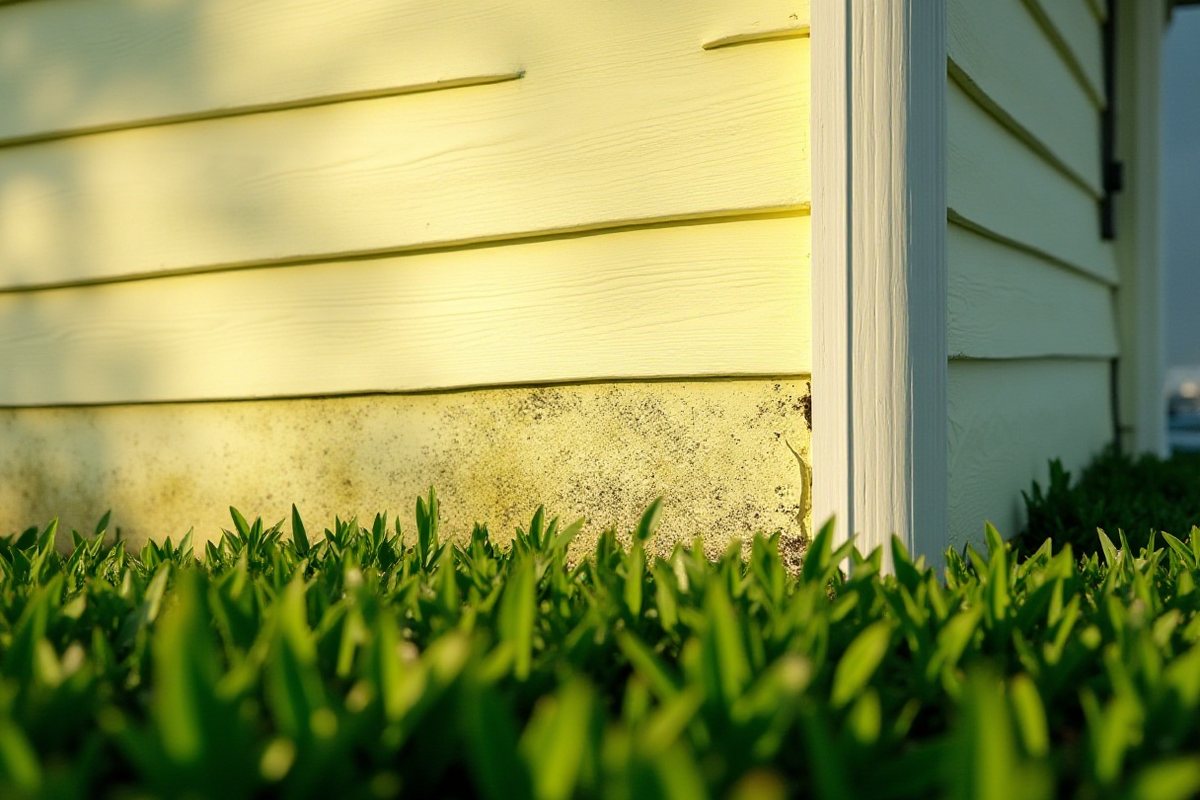
- Late winter to spring Live oaks begin releasing pollen in February and oak pollen usually peaks in March. The yellow coat it leaves on siding, screens and patios is a common reason to wash once the trees are done.
- Early summer Before the heaviest storm months, a wash removes the spring buildup so mildew has less to feed on during the wettest stretch.
- Fall Atlantic hurricane season runs June 1 to November 30 and peaks in September. Storms splash soil up the walls and leave leaf stains, so a fall wash resets the house for winter.
- Before a big event Listing the house, an appraisal visit, holiday hosting, or a paint or stain job. Paint and stain both need a clean surface to bond.
Siding: how often to soft wash a house
The two sourced numbers line up well. Angi's general guidance is to wash a house about once a year, and up to twice a year where rain, humidity or pollution are heavy. James Hardie, the fiber cement maker, tells owners to wash its siding every 6 to 12 months and specifically warns against high-pressure power washers.
Vinyl gets similar treatment. The Vinyl Siding Institute says vinyl usually needs nothing more than mild soap and water from a garden hose, and that spraying upward can drive water behind the panels. Some vinyl makers do not recommend power washing at all. Brick tolerates more, but older mortar can wear away under force, and stucco is porous enough that high pressure can crack or chip it.
That is why the frequency question and the method question go together. Washing once or twice a year is safe for every common siding as long as it is done at low pressure. For a deeper look at the process, see the house washing and soft washing page.
Roofs: every one to three years
Angi suggests that most homes benefit from a roof cleaning every one to three years, leaning toward the shorter end in humid places and under heavy tree cover. In practice, a roof in full sun in Katy may go longer than a roof under a pine canopy in Kingwood, which was marketed as "The Livable Forest" for good reason.
The dark streaks on asphalt shingles are mostly an algae called Gloeocapsa magma, according to the Asphalt Roofing Manufacturers Association. In ARMA's view, blasting shingles with a high-pressure machine is a likely way to ruin them. A roof is soft washed or not touched. The roof cleaning page explains what that looks like and what to ask.
Driveways, fences, decks and gutters: watch for the signs
No reputable source the research for this site turned up gives a fixed schedule for these surfaces. Rather than invent one, here is what to look for.
- Concrete. Gray turning green in the shade, black mildew in control joints, tire marks or a slick feel underfoot after rain. Concrete Network recommends resealing driveways every few years, and cleaning comes first. More on driveway and sidewalk cleaning.
- Wood fences. Sun and rain turn untreated wood silvery gray over time, which the USDA Forest Products Laboratory describes as normal weathering. Black or green growth on the shaded face is different, and that is the cue for a gentle wash. See fence cleaning.
- Decks. The Forest Products Laboratory links upkeep to the finish: once it is worn through in walkways, it is time to clean and refinish. Details on the deck and patio cleaning page.
- Gutters. Those black vertical stripes on the outside face bond to the painted finish and usually need a dedicated cleaner and hand work. Ask for gutter brightening with your house wash.
Six things that put your house on a faster schedule
Heavy tree cover
Pines and oaks shade the walls, drop needles and leaves into gutters and coat everything in spring pollen. Heavily wooded areas such as Spring and The Woodlands live with all three.
Sprinklers hitting walls
A spray head that wets the same section of siding or fence every morning keeps it damp all day. Adjusting the head can stretch the time between washes.
Bay or lake air
Homes near Clear Lake and Galveston Bay, such as in League City, pick up a damp, salty film that dulls siding and windows.
Dense landscaping
Hedges planted tight against the foundation block airflow, which Purdue Extension names as a key driver of mildew on walls.
An HOA with inspections
Many master-planned communities around Houston send letters about mildew on siding, roofs and driveways. If yours does, the HOA's schedule becomes your schedule.
Light colors
White trim, cream siding and pale stucco show every streak. Darker brick hides growth longer, though it is still there.
Ways to stretch the time between washes
Regular washing is only half the plan. Small changes around the house slow the regrowth.
- Trim plants back from the walls. A gap of a foot or two lets air dry the siding after rain.
- Keep gutters flowing. Overflowing gutters soak the fascia and the wall below, and the streaks follow.
- Aim sprinklers at the lawn, not the house. It costs nothing and keeps one wall from staying wet.
- Ask about roof treatment options. ARMA notes that zinc strips near the ridge may slow algae and moss regrowth. A roofer can tell you whether they suit your roof.
- Reseal concrete when it is due. Sealed concrete resists stains better, per Concrete Network, and stays cleaner between washes.
Getting on a schedule without the guesswork
Nobody at Houston Power Washing Pro washes houses; it runs a free referral phone line. Call (832) 662-4107 at any hour, say which surfaces need attention, and an automated assistant transfers the call to an owner-run pressure washing business nearby. Whoever picks up can look at your home, tell you which walls are growing back fastest and suggest a realistic schedule. It quotes and does the work itself, and you pay it directly.
Not sure if your house is due? Call, describe what you are seeing on the walls, roof or driveway, and the company you are connected with can tell you what it needs.
If you are budgeting for regular washing, read how much pressure washing costs and how to get a pressure washing quote. To understand why houses are soft washed and not blasted, see power washing vs pressure washing. Homeowners in Spring, Kingwood and The Woodlands will find local notes on tree cover on each area page.