
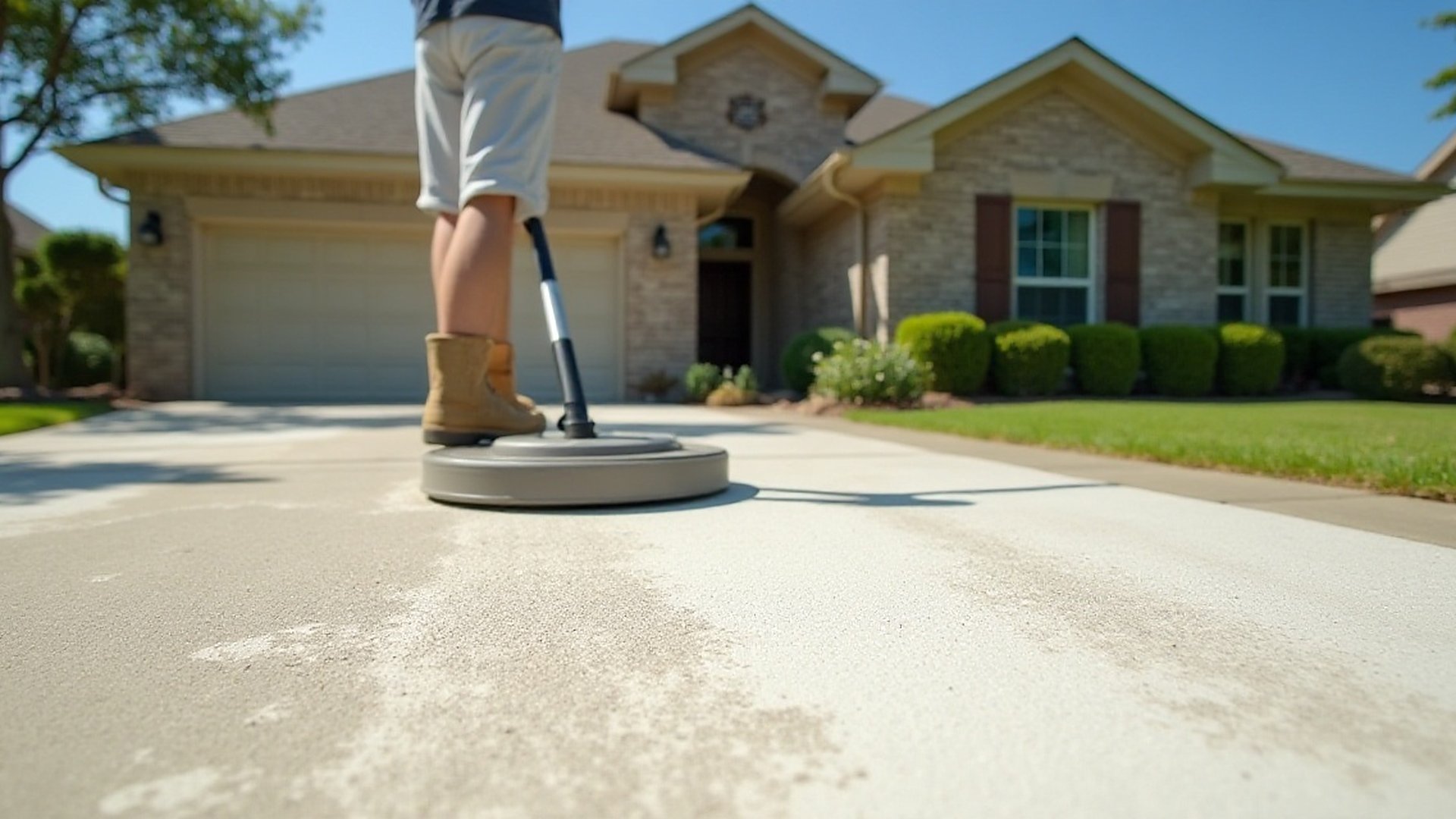
Does pressure washing damage concrete? It can, but it does not have to. A driveway or patio in good condition handles high-pressure cleaning without trouble when the spray is spread wide and kept moving. The scars people worry about, such as pale stripes, a sandy texture or pebbles poking through, almost always trace back to how the job was done.
This guide explains each type of damage, what causes it and what prevents it. It also answers the question that usually comes next, which is how much pressure concrete needs, without turning into a machine manual. The point is to help you recognize good work and spot a careless operator before they start on your slab.
Houston Power Washing Pro is a free phone line. It connects you with an independent, owner-run local pressure washing company, and that company inspects, quotes and does the cleaning.
How pressure washing damages concrete, and what prevents it
| Damage | What it looks like | Usual cause | What prevents it |
|---|---|---|---|
| Etching | Rough, sandy patches where the smooth top skin is gone | Too much force at too close a range, per Concrete Network | Wider spray, more distance, and never parking the spray on one spot |
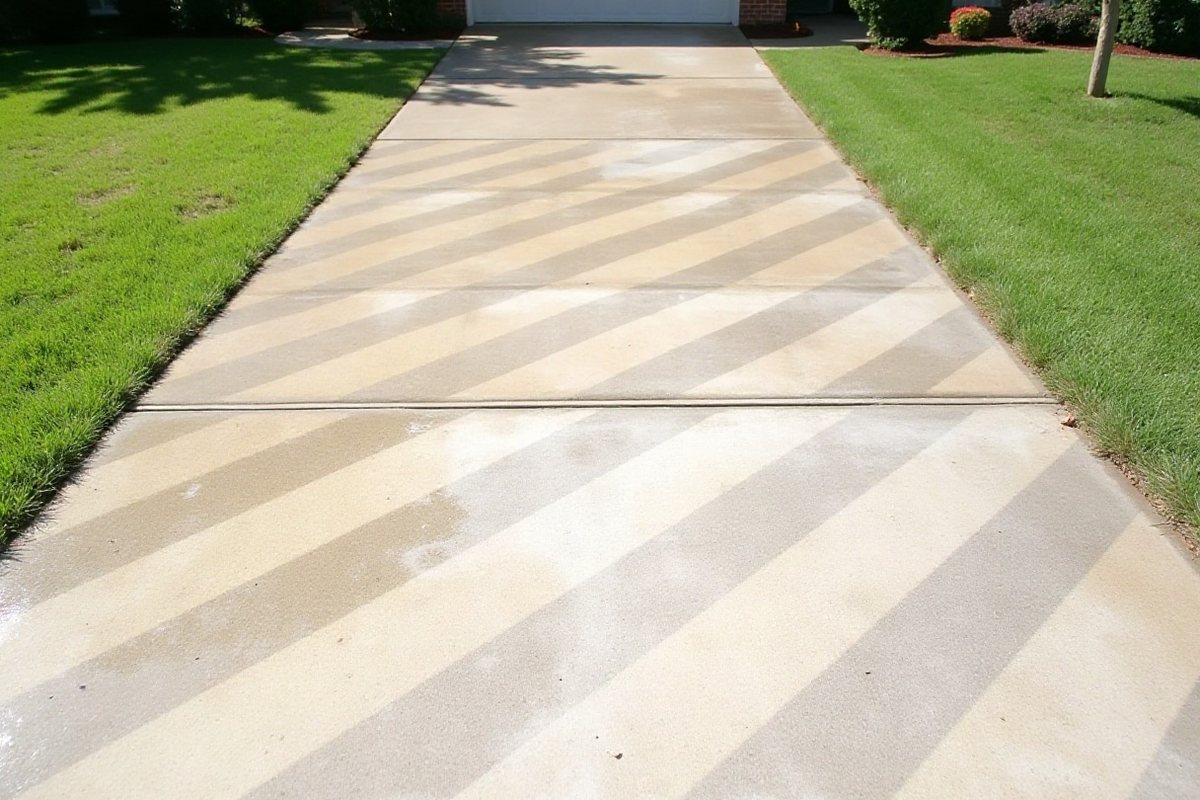
| Zebra striping (wand marks) | Alternating light and dark bands across the slab | A narrow spray swept by hand in overlapping passes | A rotary surface cleaner that applies even pressure across its whole width |
| Exposed aggregate | Small stones showing through where cement paste has washed away | Repeated high pressure on worn or weak concrete | Checking the slab first and easing off on older or flaking areas |
| Sealer or coating loss | Patchy shine, peeling or cloudy areas on sealed, stamped or coated concrete | Treating a sealed surface like bare concrete | Asking what finish is on the slab and adjusting the method to it |
| Blown-out joints | Empty paver joints or damaged joint filler in expansion gaps | Spray aimed straight into joints | Working along joints carefully and re-sanding pavers when needed |
| Marks on young concrete | Scoring or texture loss on a recently poured slab | Cleaning before the surface has fully hardened | Telling the company the pour date and following the installer's advice |
None of these are inevitable. Every row on the right is a choice the operator makes on the day, which is why the company matters more than the machine.
What PSI pressure washer is used to clean concrete?
This is a fair question, and it deserves a straight answer rather than a number to dial in. For context, Concrete Network describes a typical power washer as running somewhere around 1,500 to 3,300 pounds per square inch, which it says is more than 50 times the force of a garden hose with a spray nozzle. It also warns that too high a setting or too close a range can etch concrete.
Notice what that warning pairs together: pressure and distance. The rating printed on a machine says very little about what actually reaches the slab. Four things shape the result far more:
- Spray width. A tight stream concentrates force into a small spot. A wide fan spreads it out.
- Distance. Force drops quickly as the tip moves away from the surface, and rises fast as it gets close.
- Movement. A spray that pauses, even briefly, keeps working on the same patch.
- The tool. A rotary surface cleaner holds spinning jets at a fixed height inside a hood, so every part of the slab gets the same treatment. Hand wands are for edges and corners.
That is why a careful company does not answer the PSI question with one figure. It looks at the age and condition of the concrete, the finish, and how heavy the growth is, then sets up for that slab. If you are hiring, the better question to ask is "Will you use a surface cleaner on the flat areas?" For the bigger picture of methods, see power washing vs pressure washing.
Etching, striping and exposed aggregate, explained
A finished concrete slab has a thin top layer of cement paste over the sand and stone mix below. That layer is what gives a broom-finish driveway its texture and even color. Too much concentrated force wears it away. When the wear is uniform it shows up as a rougher, lighter surface, which is etching. When it follows the path of a hand wand it creates bands, the zebra stripes in the photo above. When it goes deeper, the small stones in the mix start to show.
Industry sources note that deep striping and exposed aggregate may only be corrected by grinding or resurfacing. That is far more expensive than the cleaning was, which is the strongest argument for hiring carefully the first time.
Concrete conditions to mention when you call
A few situations call for a gentler or different approach. Bring them up early so the company you are connected with can plan for them.
Sealed, stamped or coated concrete
Decorative and sealed surfaces need more care than plain broom finish. Concrete Network's stamped concrete maintenance guide covers cleaning and resealing these surfaces. Tell the company what finish you have, and ask how it will protect it.
White powder or crust (efflorescence)
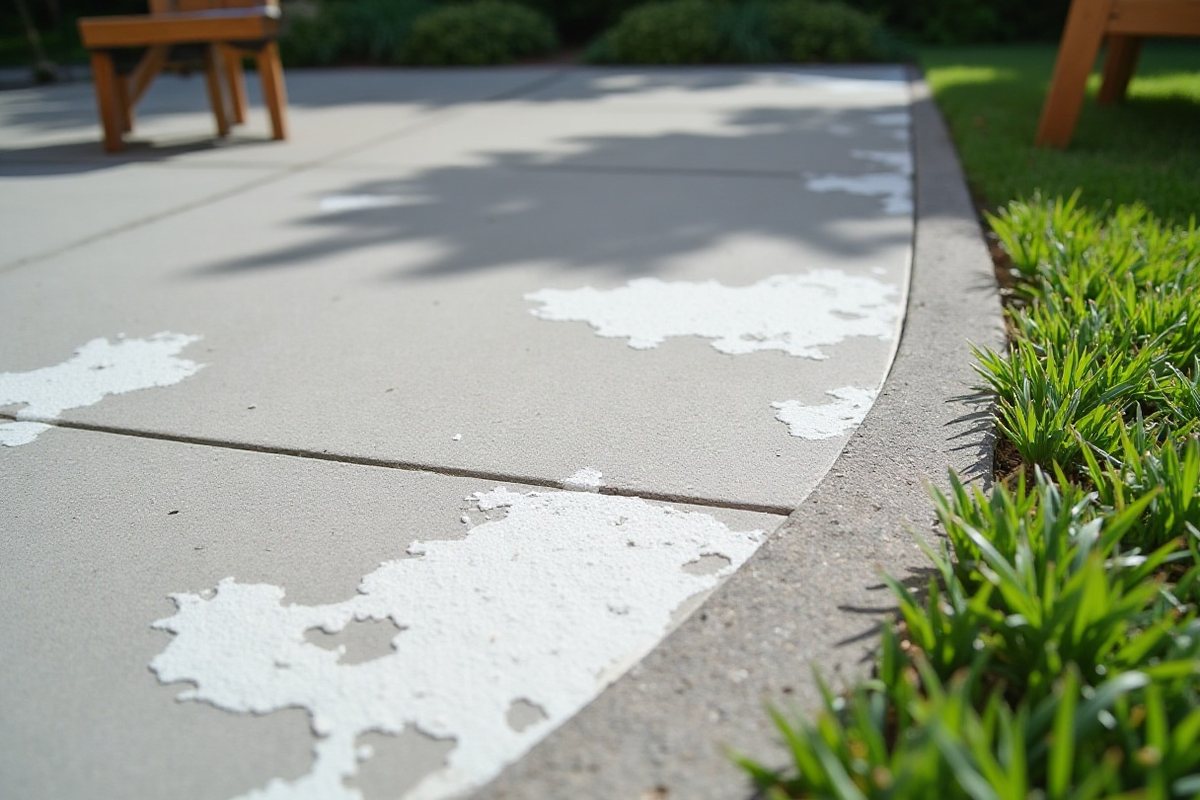
That chalky white film is not dirt. Concrete Network explains that moisture moving through the slab carries calcium salts to the surface, where they react with air and harden. Because water causes it, efflorescence can return after cleaning. Point it out so the company can explain its approach and set expectations.
Recently poured concrete
Concrete keeps curing well after it looks finished, and a young surface marks more easily. Ask the contractor who poured it how long to wait, and share the pour date when you call.
Old, cracked or flaking slabs
Pressure finds every weak spot. Spalled areas, wide cracks and crumbling edges can lose more material. A good company points these out before it starts, not after.
Stains that pressure alone will not fix
Turning the pressure up to chase a stubborn stain is exactly how concrete gets etched. Some marks need a treatment, not more force.
Rust. Orange fans along the lawn edge usually come from irrigation water with iron in it, or from iron-based fertilizer, according to Concrete Network. A rust-specific product lifts them; pressure does not.
Oil. Degreasers loosen oil but do not always break it down, so old, deep stains may only fade. See oil and rust stain removal.
Mildew and algae. In Houston's damp shade these grow into the surface pores. A pre-treatment kills the growth so the rinse can be gentler.
Signs the company will protect your concrete
You do not need to supervise the work. A few observations before and during the job tell you most of what you need to know.
Reassuring
- Walks the slab first and asks about sealers, coatings and its age.
- Runs a round surface cleaner on the open areas and keeps the wand for edges.
- Pre-treats oil, rust and heavy mildew instead of pushing harder.
- Blocks or covers nearby storm drain inlets. Houston's storm sewer is meant for rain water only.
- Can show proof of liability insurance and writes a price for each surface.
Worrying
- Plans to clean the whole driveway with a hand wand alone.
- Holds the tip a few inches off the concrete to "get it cleaner."
- Shrugs off questions about your stamped or sealed finish.
- Promises any stain will come out completely before seeing it.
- Lets grimy runoff wash straight into the street.
Getting concrete cleaned the careful way
The free line at (832) 662-4107 answers around the clock with an automated assistant. Describe the slab, give a rough size, and your call is handed to a local pressure washing company that is independently owned and run by its owner. Mention anything from the list above: a sealer, stamped finish, efflorescence or a newer pour. The company sets its own price, does the work and is paid by you directly.
Tell the line about the slab: how big, how old, and whether it is sealed or stamped. The company you are connected with plans the cleaning around it.
For the service itself, see driveway and sidewalk cleaning and residential pressure washing. If you are comparing prices, read what pressure washing costs, and for timing, how often to wash each surface. The line takes calls across the region, including Cypress, Pearland and Tomball, where wide driveways and long walks make careful flatwork worth the call.