
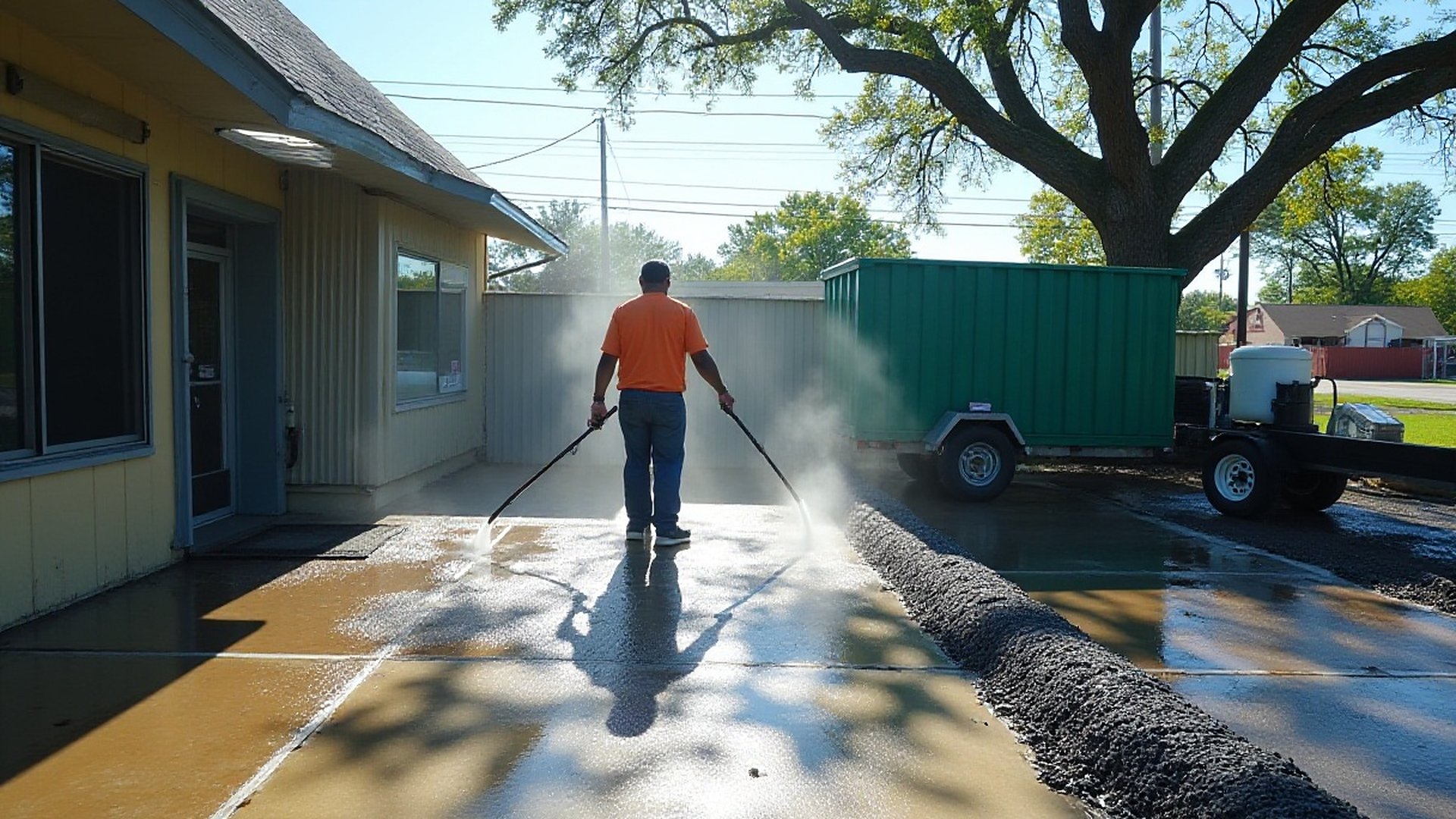
Ask ten Houston homeowners for the difference between power washing and pressure washing and most will say there is none. In daily use they are right. The technical distinction is narrow: power washing, by the usual convention, means high-pressure cleaning with heated water, while pressure washing means the same thing with cold water.
The more useful question is a different one: should this surface get high pressure at all? That is where a third method, soft washing, comes in. This guide explains all three side by side, shows where each one fits on a Houston property, and answers the question people most often ask next, which is what machine to buy for their siding.
A quick note on the name of this site. Houston Power Washing Pro uses "power washing" the way most people do, as the everyday term for exterior cleaning. It is a free phone line, and the independent business it hands your call to is the one that picks the method.
Power washing, pressure washing and soft washing compared
| Power washing | Pressure washing | Soft washing | |
|---|---|---|---|
| Water | Heated | Unheated (cold or tap temperature) | Unheated |
| Pressure | High | High | Low, close to a garden hose |
| What does the cleaning | Force plus heat, which melts and loosens grease | Force of the spray | A cleaning solution that kills mildew and algae, then a gentle rinse |
| Suits | Greasy, oily concrete: restaurant pads, drive-thrus, fuel areas, equipment | Hard, durable surfaces: driveways, walks, patios, pool decks | Siding, stucco, painted trim, roofs, screens, delicate brick |
| Avoid on | Wood, vinyl and aluminum siding (Angi notes heat can harm them) | Shingles, siding, stucco, soft wood, window seals | Heavy oil and grease, which need heat or a degreaser |
| Typical Houston call | A business with a grease-stained dumpster area | A homeowner with a dark, mildewed driveway | A two-story house with a green north wall and a streaked roof |
Most residential jobs in the Houston area combine the last two columns: soft washing on the house and roof, pressure on the flatwork. Power washing in the strict hot water sense shows up far more on commercial work.
Where the hot vs cold convention comes from
Angi describes the commonly cited difference this way: a power washer heats its water, and a pressure washer does not. Equipment makers explain why anyone would pay for a heater. Hotsy and Kärcher both describe cold water as tending to push grease around a surface, while hot water melts and emulsifies oils and fats, cleans faster and needs less detergent. Kärcher puts a rough figure on it: each 50 degree Fahrenheit rise in temperature cuts the chemical reaction time about in half.
No standards body has written an official definition, so treat the hot and cold split as a widely repeated convention rather than a rule. Plenty of companies advertise "power washing" with cold water machines, and that is not misleading in ordinary English. If heat matters for your job, ask directly whether the company runs hot water equipment.
When hot water actually earns its keep
Heat is worth asking about when the dirt is greasy. That means restaurant dumpster pads, grease bin areas, drive-thru lanes, loading docks, shop floors and fleet vehicles. In the City of Houston, a business that counts as a special waste generator, such as a restaurant, may only use a pressure washing company holding a current Houston Health Department permit and equipped to collect its wash water. If that is your situation, ask the company you are connected with whether it holds that permit. The commercial pressure washing page covers these jobs in more detail.
Pressure washing: the right tool for hard surfaces
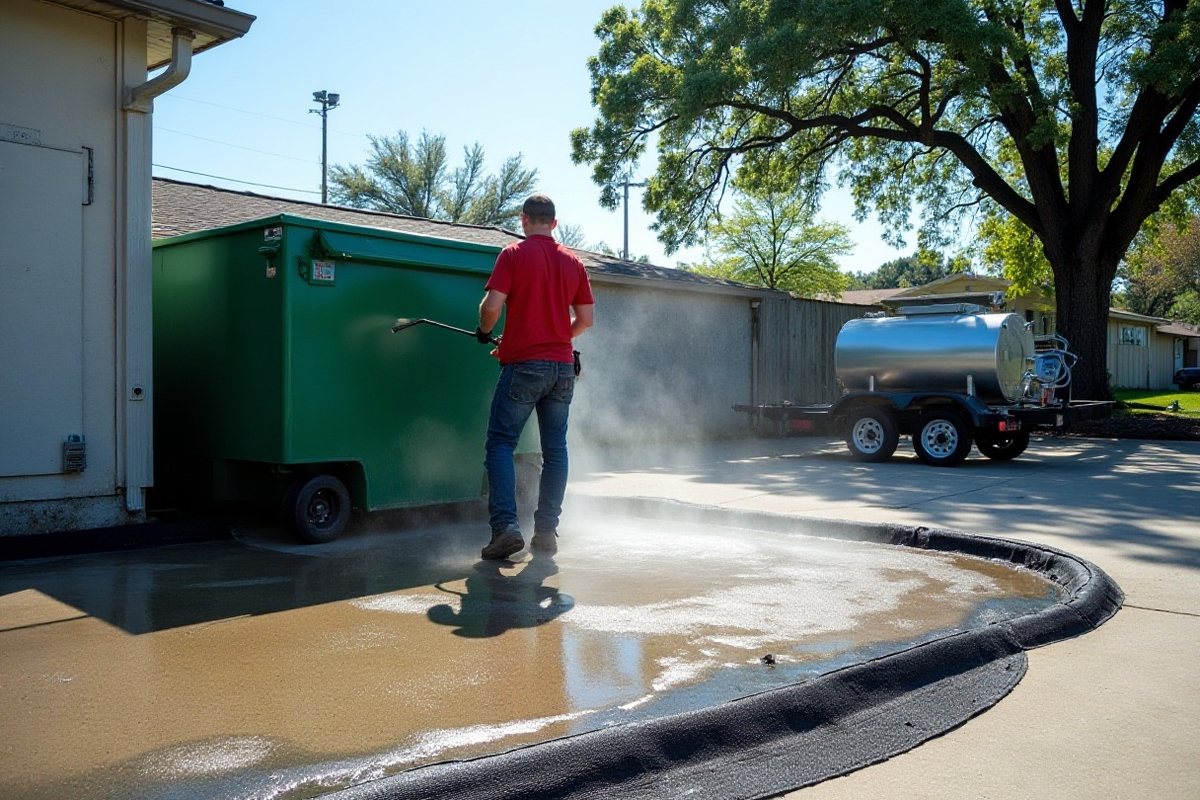
Cold water at high pressure is what most people picture: a wand or a spinning surface cleaner moving across a driveway, and a clean stripe appearing behind it. Concrete, pavers and stone patios can take that force when the spray is spread out and kept moving. On a Houston driveway it lifts the mildew, algae and pollen that build up in the surface pores.
Force has limits even on concrete. Hold a narrow spray too close and it can etch the surface or leave lighter stripes, which is covered in depth in does pressure washing damage concrete. For everyday flatwork, see residential pressure washing and driveway cleaning.
Soft washing: where most of a house belongs
Angi defines soft washing as low pressure plus a cleaning solution that kills and removes mold, algae and mildew, aimed at delicate surfaces like painted wood, vinyl, stucco, brick and roofing. This Old House describes the pressure used on roofs as roughly that of a garden hose.
The cleaning solution, not the spray, does the heavy lifting. That makes soft washing a better fit for Houston's main problem, which is living growth rather than caked-on dirt. Blasting algae off a wall removes what you can see; killing it at the root slows the return.
What pressure washer should you use to clean siding?
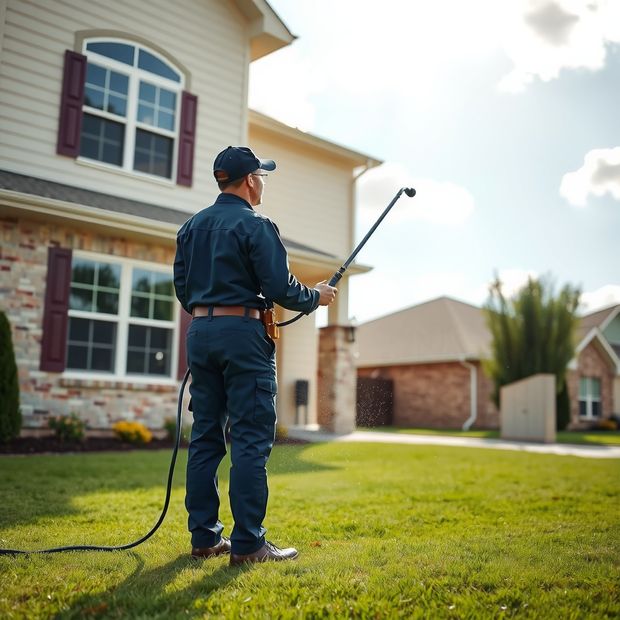
This is one of the most searched follow-up questions, and the honest answer is that a homeowner does not need to choose one. Hire a company that soft washes houses. Here is why the siding makers themselves steer people away from high pressure:
- Fiber cement. James Hardie's care guidance says not to use a high-pressure power washer on its siding.
- Vinyl. The Vinyl Siding Institute warns that spraying upward drives water behind the panels, and notes that some vinyl manufacturers do not recommend power washing at all.
- Stucco. Its porous texture can crack, chip or take on water under high pressure.
- Windows and trim. A strong spray can push water past window and door seals and loosen caulk, so a soft wash crew keeps the force low around openings.
- Roofs. Shingle industry guidance from the Asphalt Roofing Manufacturers Association rules out high-pressure systems on asphalt roofs because of the damage they tend to cause.
A company that knows what it is doing will tell you the siding is getting a soft wash before you even ask. If it plans to run the same high-pressure setup across the driveway and up the walls, that is your cue to call someone else. See house washing and soft washing and roof cleaning for what that work looks like.
Which method does each surface need?
You do not need to name the method when you call. Describe the surface and the problem, and a good company picks. For reference, here is how it usually breaks down around a Houston property.
Usually pressure
Concrete driveways, front walks, curb strips, broom-finish patios, pool decks without coatings, and sturdy pavers (with care for the joint sand).
Usually soft wash
Vinyl, fiber cement and painted siding, stucco, painted trim, soffits, shingle and tile roofs, screened enclosures and the outside of gutters.
Often heated water
Restaurant pads, grease bins, drive-thru lanes, shop and garage floors with oil, loading docks and commercial equipment.
Wood sits in between. Fences and decks need gentle handling because excess pressure tears the soft grain, so most careful companies treat them closer to a soft wash. The fence cleaning and deck and patio cleaning pages explain why.
Why the words get mixed up
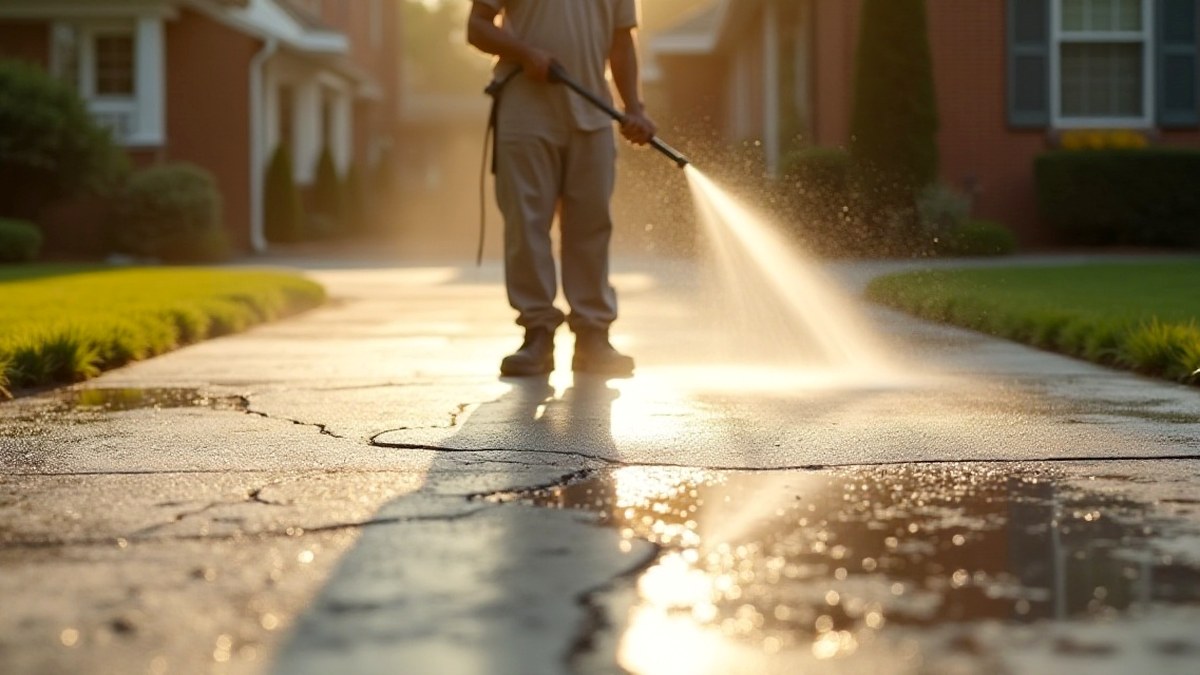
Part of it is marketing. "Power washing" sounds stronger, so it appears in plenty of business names, including this one. Part of it is search habit: people type whichever phrase comes to mind. And part of it is that the machines look alike, with a hose, a wand and an engine, whether or not a burner is attached.
None of that changes what you should check. Whatever a company calls its service, three questions sort the careful operators from the rest: can it show proof of liability insurance, will it put a price for each surface in writing, and will the house, roof and any wood be soft washed rather than blasted? More questions worth asking are in how to get a pressure washing quote.
Calling about any of the three
Houston Power Washing Pro does not wash anything itself. Dial (832) 662-4107 day or night and an automated assistant asks what needs cleaning and roughly how big it is, then transfers you to an independent, owner-run local company. That company decides between pressure, soft washing and heated water for each surface, quotes its own price and is paid by you. If you want a feel for regular upkeep first, see how often to pressure wash a house.
Say what the surface is and what it looks like: oily, green, streaked or just gray. The company on the other end matches the method to it.
The line covers greater Houston, including Katy, Sugar Land and Cypress, where large master-planned communities mean a lot of siding, roofs and wide driveways to keep clean.