
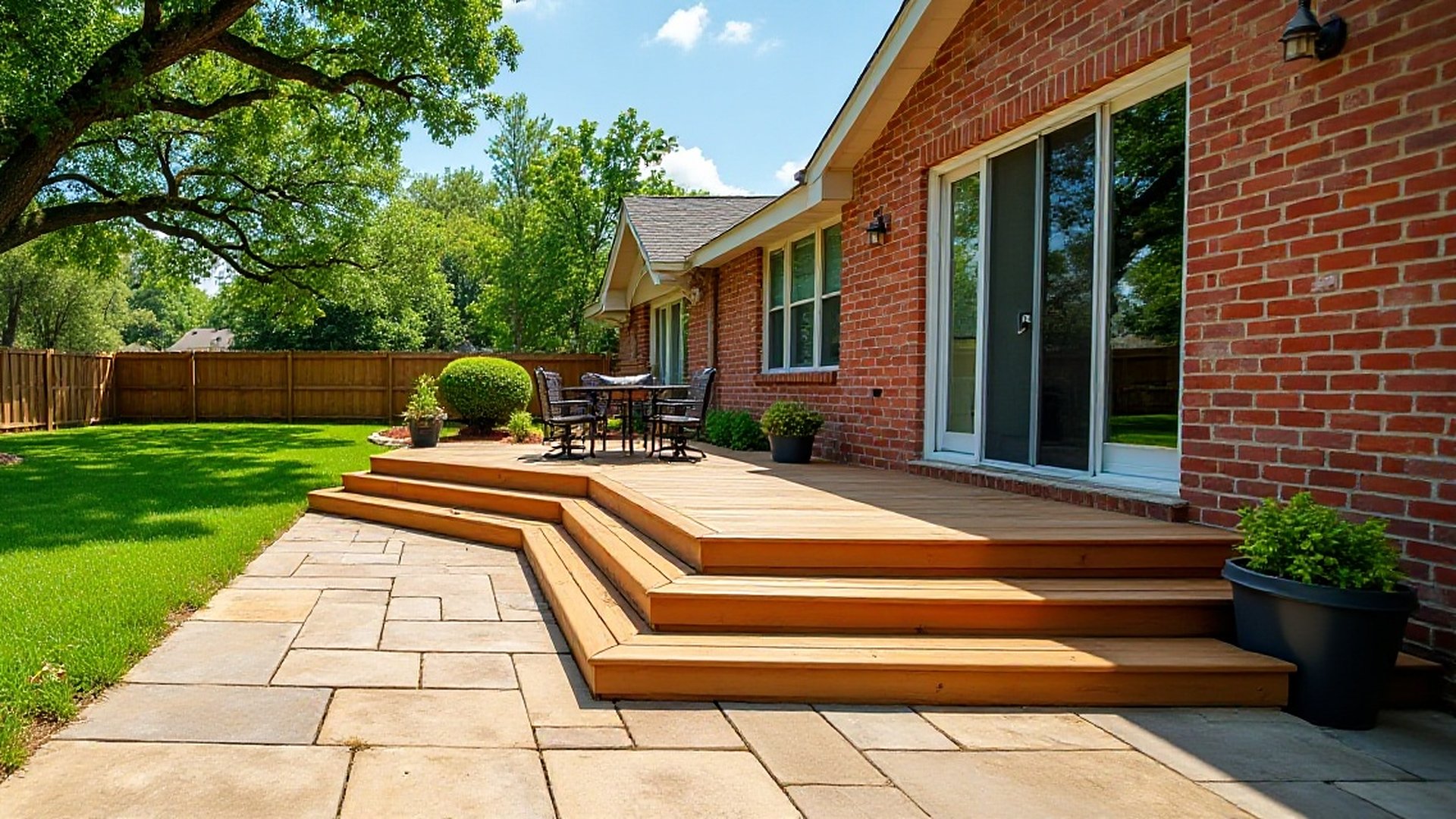
Deck and patio cleaning in Houston covers more materials than most people realize. One backyard can have a wood deck, a composite step, a paver patio and a stamped concrete walk to the pool, and each one reacts to water, cleaner and pressure differently. The job is to clean all of them without splintering the wood, scarring the composite or blowing out the paver sand.
Houston Power Washing Pro does not send anyone to your yard. It is a free phone line. Call (832) 662-4107, tell the automated assistant what kind of deck or patio you have and about how big it is, and you are put through to an independent, owner-run local company. That company inspects the outdoor space, gives you its own price, does the cleaning and collects payment from you directly.
Patio cleaning in Houston, surface by surface
| Surface | Typical Houston problem | What a careful company does |
|---|---|---|
| Wood deck (pine or cedar) | Gray boards, black mildew in the gaps, slick shaded steps | Wood cleaner and low pressure with a wide spray, working with the grain |
| Composite deck | Mildew spots, pollen film, leaf stains under planters | Follows the decking brand's care guide; soft cleaning first |
| Concrete pavers | Green film, weeds in joints, white haze | Moderate pressure kept off the joints; may re-sand afterward |
| Stamped or colored concrete | Dull, worn sealer and algae in the pattern lines | Gentle cleaning that respects the sealer; resealing discussed separately |
| Plain concrete patio | Dark shade stains, grill grease, rust rings from furniture | Surface cleaner for even results, with spot treatment for grease and rust |
Wood decks: what Houston weather does to them
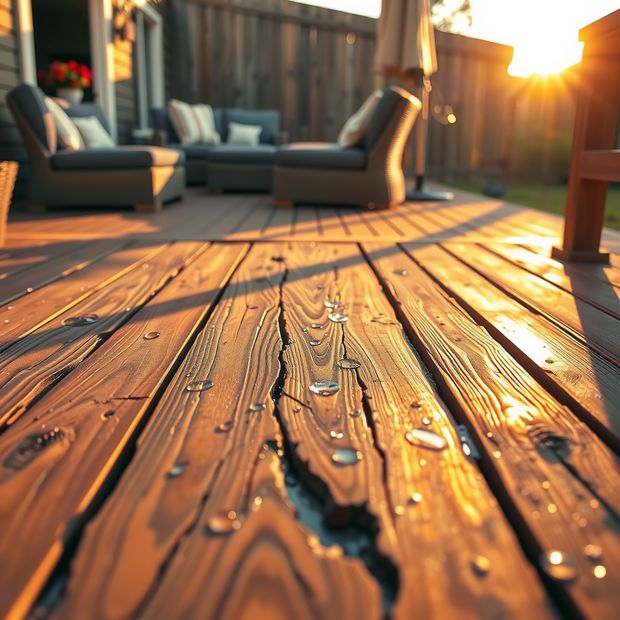
The USDA Forest Products Laboratory's work on deck finishes describes what happens to a deck that goes without maintenance: checks and cracks open in the boards, the grain rises, and mildew moves in. Its research also says refinishing reduces those problems. On a Houston deck, the humid summers and long wet spells speed every one of those steps along.
Cleaning is the first half of that maintenance. It takes off the gray, weathered surface fibers, the mildew and the pollen so a new coat of stain or sealer has bare wood to grip.
Why pressure is the wrong tool for most wood
Decking boards have soft and hard bands of grain. A forceful spray digs out the soft bands and leaves raised, hairy fibers that stain makers and deck refinishers call furring. A furred deck looks rough, catches bare feet and soaks up stain in blotches unless it is sanded. YellaWood, which makes pressure-treated pine, recommends mild soap and low-pressure washing with a wide fan, with the wand kept moving. That is the approach to look for.
From dirty deck to fresh stain: the usual order
Stain makers Behr and Sherwin-Williams lay out deck preparation in roughly this sequence. Knowing it helps you judge a quote and plan your weekend.
- Clear and sweep. Furniture, grills and planters come off, and leaves get swept out of the board gaps.
- Wet the wood and nearby plants. Water first helps the cleaner work evenly and protects the beds around the deck.
- Apply a wood cleaner and scrub with the grain. The cleaner loosens the gray layer and mildew so it rinses away without force.
- Rinse thoroughly. Leftover cleaner can interfere with the finish, so the rinse matters as much as the wash.
- Let it dry completely. Behr says about 24 hours, Sherwin-Williams about 24 to 48. Damp, shaded decks can take longer.
- Stain or seal. This is often a separate job. Ask the company whether it offers it or whether you should line up a stainer.
Composite decks need a different conversation
Composite and capped composite boards do not gray the way wood does, but they are not maintenance free. Mildew grows in the dirt that settles on them, especially under planters, along the house wall and in shaded corners. Each brand publishes its own cleaning instructions, and what is fine for one product line may not be for another. Tell the line the brand if you know it, and ask the company to follow that maker's care guide. A scarred composite board cannot be sanded back like wood.
Paver and stamped concrete patios
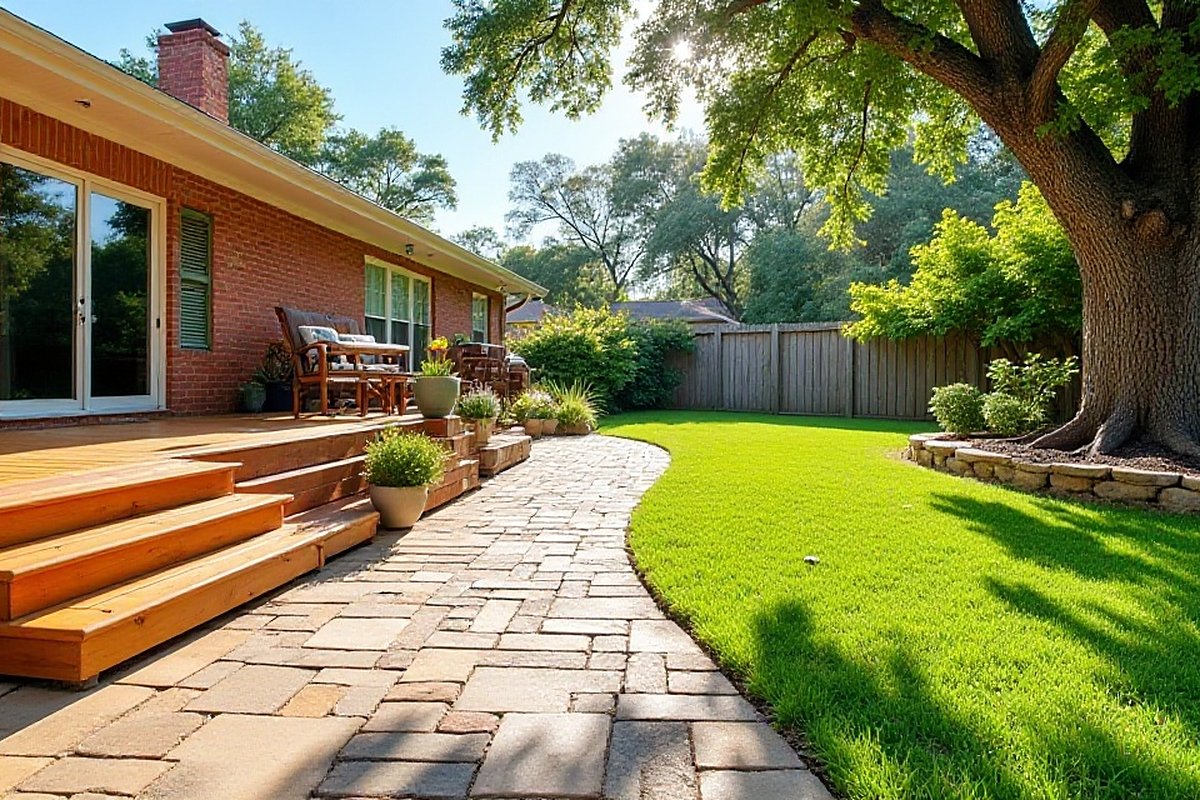
Pavers bring two worries: the sand in the joints and the weeds that grow in it. Pressure washing clears the visible weeds but does not reach the roots, so they usually return, and strong pressure aimed at the joints can wash out the sand that holds the pavers in place. Ask whether the company re-sands the joints after cleaning and whether it recommends sealing them.
Stamped and colored concrete patios are usually sealed to protect the color and pattern. Concrete Network's maintenance guidance for stamped concrete covers cleaning and periodic resealing. A gentle clean keeps the pattern lines from staying green, and if the sealer already looks worn, the company can tell you whether resealing makes sense. Resealing waits for a dry slab: Concrete Network advises giving washed concrete two to three days before any sealer goes on, so no water gets locked underneath.
Any white, powdery haze on concrete or pavers may be efflorescence: salts carried up through the slab by moisture that react with air at the surface. It is not dirt, and it needs a different treatment than mildew, so point it out when the company visits.
Good signs when the company arrives
- Asks what your deck or patio is made of before setting up.
- Wets down flower beds and lawn edges before any cleaner goes on and rinses them after.
- Uses a wide spray on wood and keeps it moving.
- Points out loose boards, popped nails or worn sealer it notices.
- Keeps runoff and cleaner out of the pool and away from street drains.
Reasons to pause the job
- Plans to blast the wood deck with the same setup used on the driveway.
- Has not asked about the composite brand or the sealer on the patio.
- Aims a narrow spray straight down the paver joints.
- Will not write down which surfaces are included in the price.
- Cannot show proof of liability insurance when you ask.
Houston-area backyards with their own twist
Wooded neighborhoods like Kingwood and The Woodlands keep decks shaded and damp for much of the year, so mildew and pine debris build up between the boards. In The Woodlands, exterior changes that include decks need prior written approval from the village Residential Design Review Committee, so ask your RDRC before changing stain color after a cleaning.
Around Conroe, lakefront homes often have docks and boathouses, which need a San Jacinto River Authority permit on Lake Conroe. The SJRA's watershed protection plan names runoff from development around the lake as a main pollution source, so on a lakeside deck, ask the company what it sprays and where the rinse water goes.
What happens when you call about a deck or patio
An automated assistant answers (832) 662-4107 day or night. It handles roofing and air conditioning calls as well, so it checks which service you need first. Then you describe the space: "a 300-square-foot pine deck and a paver patio by the pool," for instance. You are transferred to a local company that hears that summary before picking up, or, if it is out on a job, it receives your name, number and request and calls you back. The quote, the date and the work are arranged between you and that company.
How this line works: Houston Power Washing Pro is a free phone line, not a pressure washing company. It connects you with an independent local pressure washing company, which inspects, quotes, does the work and is paid by you directly. Houston Power Washing Pro never charges callers. It may be paid a referral fee by the companies it connects callers with. How it works.
Related cleaning
Decks and patios usually sit next to other surfaces that need the same attention. A fence cleaning pairs well with a deck because both are wood and both need a gentle method. Grill grease and rust rings on concrete are covered under oil and rust stain removal. Before you compare bids, read what pressure washing costs and whether pressure washing damages concrete.