
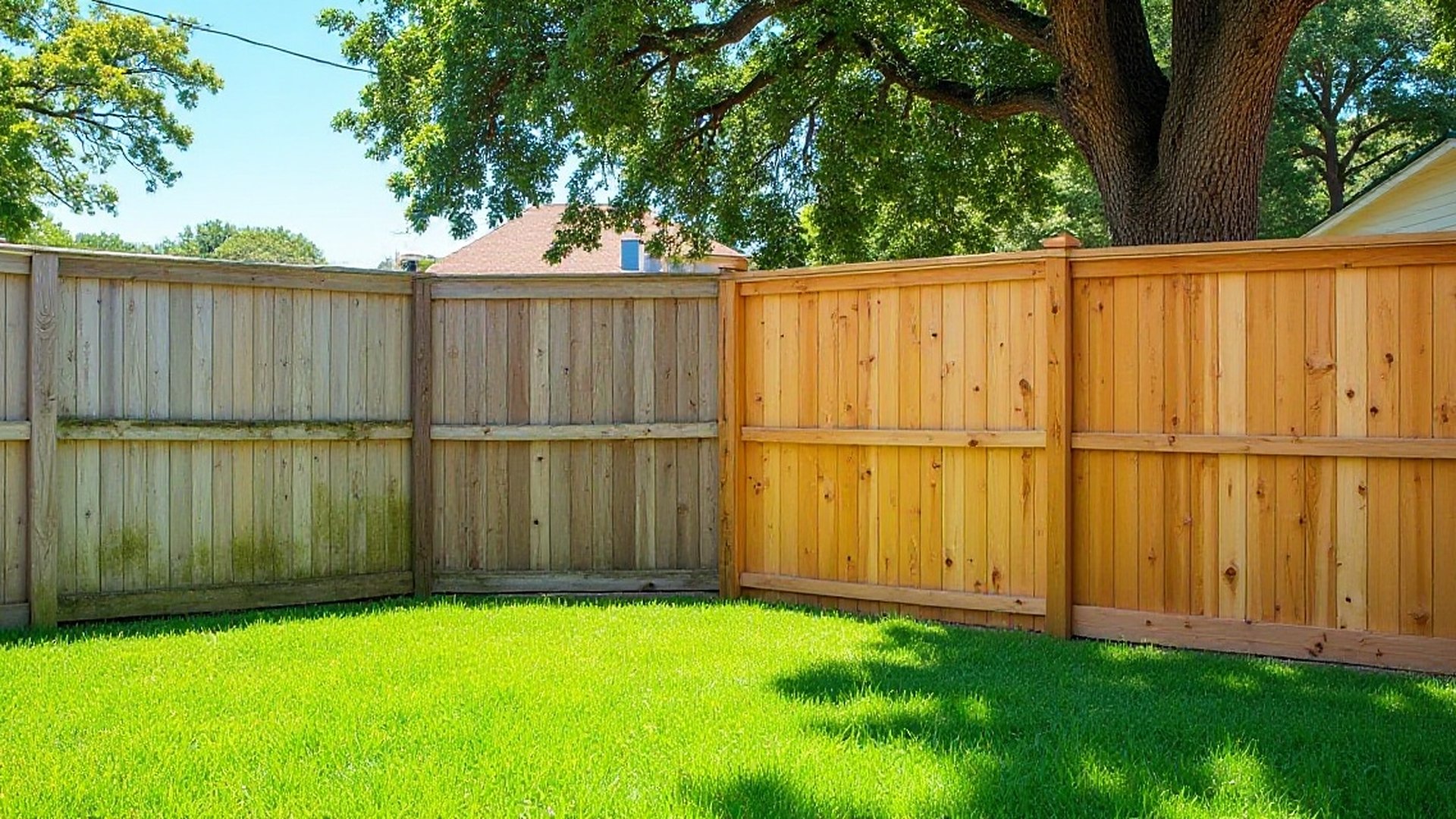
Fence cleaning in Houston usually starts with a fence that has quietly changed color. New cedar or pine goes silver within a few summers, then the bottom boards near the sprinklers turn green, then black specks of mildew show up on the shady side. A good fence cleaning company can bring most of that back without leaving the boards fuzzy or striped.
Houston Power Washing Pro is a free referral line, not a fence washing outfit. Dial (832) 662-4107, tell the automated assistant roughly how many feet of fence you have and what it is made of, and you are transferred to an independent, owner-run local company. That company sees the fence, names its price, does the cleaning and is paid by you.
Three kinds of fence, three different jobs
Wood privacy fences
The most common fence behind Houston homes, and the one that needs the most care. Cedar and pressure-treated pine both gray in the sun and grow mildew where they stay damp. The goal is to lift the gray layer and the growth with a cleaning solution and gentle rinsing, not to strip wood away.
Vinyl fences
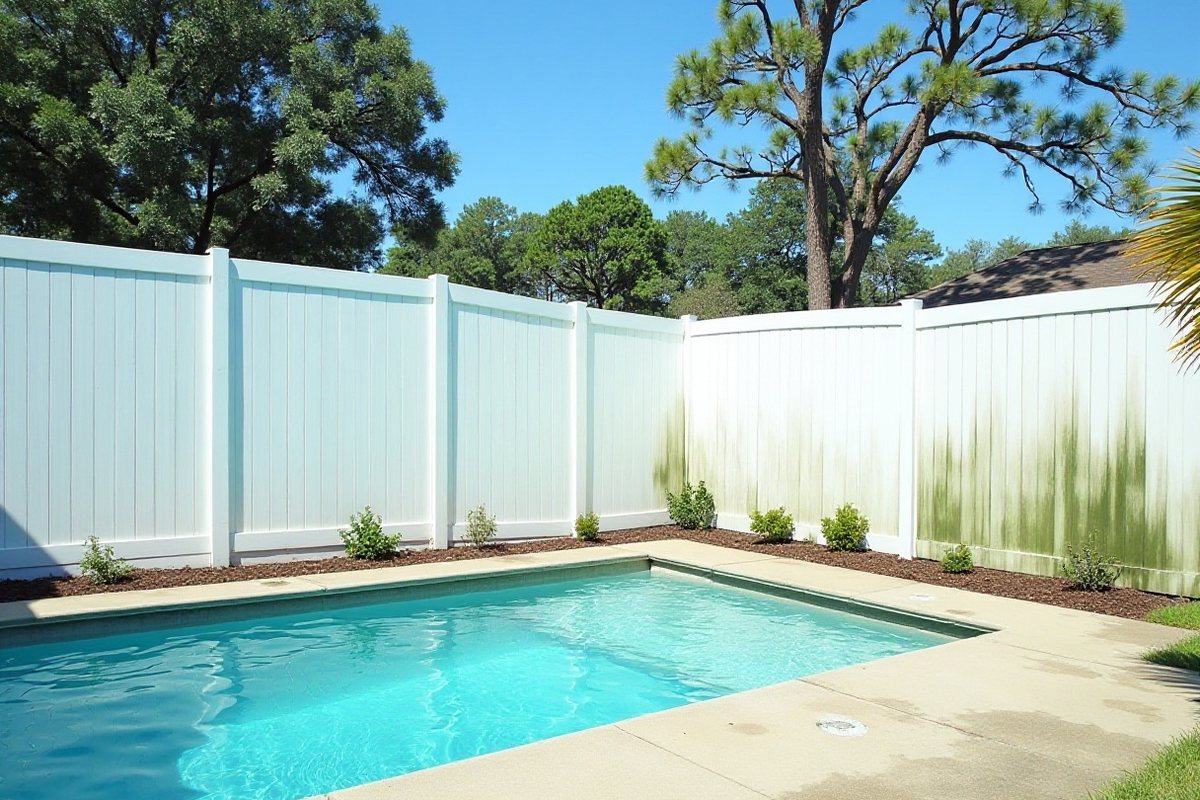
Vinyl does not gray, but it does turn green on the shaded face, collect sprinkler spots and pick up red clay splashed up by storms. It cleans with a soft wash and rinse. Too much pressure can scuff the finish and leave a dull patch that looks worse than the dirt.
Wrought iron and metal
Iron fences and pool gates collect grime, mildew on the shaded side and rust where paint has chipped. Washing removes dirt and loose flakes before repainting. Heavy pressure can peel sound paint and open more spots to rust, so lower pressure and hand detail work better.
Why Houston wood fences go gray and green
The gray is weathering. The USDA Forest Products Laboratory explains that ultraviolet light in sunlight breaks down the outer surface of wood, rain washes away the broken-down material, and the fibers left behind give the wood a silvery-gray sheen. Repeated wetting and drying roughens the surface and raises the grain.
The green and black come from Houston's damp air. Bush Intercontinental averages about 52 inches of rain a year under the National Weather Service's current normals, and Purdue Extension notes that mildew grows most in warm, humid climates on surfaces where shrubs and trees block air movement. That describes the back fence line in most Houston subdivisions: shrubs on one side, a neighbor's tree overhead, and a sprinkler head soaking the bottom rail.
Does power washing damage wood?
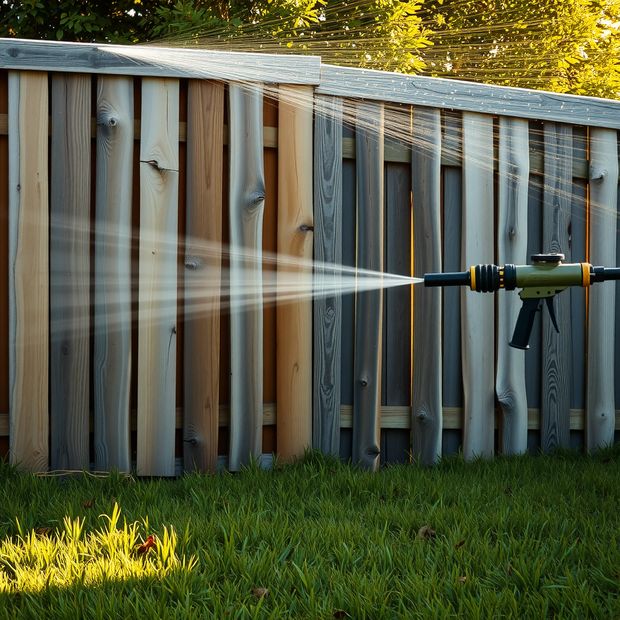
This is the question most people ask before they hire anyone, and the honest answer is that it depends on how it is done. Wood has soft, light bands of growth between harder, darker ones. A tight, powerful spray carves into the soft bands first. The result is called furring: a raised, hairy, splintery surface that looks like the wood is growing fuzz. Hold the spray in one spot or swing it unevenly and you also get lap marks and stripes across the boards.
Furring is not just cosmetic. Stain soaks into the torn fibers unevenly, so a damaged fence has to be sanded before it will take stain well. On a 150-foot backyard fence, that is a lot of sanding.
| Gentle cleaning | Blasting with high pressure | |
|---|---|---|
| How the gray comes off | A wood cleaner loosens it, then a low-pressure rinse carries it away | Force tears it off along with good wood |
| Surface afterward | Smooth, with the grain intact | Fuzzy, splintered, sometimes striped |
| Mildew | Treated, so it is killed rather than just moved | Visible growth gone, but it can return quickly |
| Ready for stain? | Yes, once fully dry | Often needs sanding first |
| Plants along the fence | Wet down and rinsed before and after | Often ignored |
The people who make stains and treated lumber say the same thing. Behr's fence guidance says that if a pressure washer is used to rinse, it should be on its broadest spray pattern and held well back from the wood. YellaWood, a maker of pressure-treated pine, says mild soap and low-pressure washing with a wide fan, keeping the wand moving, cleans surface mold and dirt without damaging the wood. A careful fence cleaning company works that way and lets the cleaning solution, not the pressure, do the heavy lifting.
Not sure if your fence can be saved or just needs a wash? Call and describe it: the material, the length and how gray or green it looks. The company you reach can tell you what it needs.
Cleaning before stain or paint
Many fence calls are really the first step of a staining project. Stain needs bare, clean, dry wood to soak into. Here is a sensible order of events, so you can line up the cleaning and the staining without wasting a weekend.
- Cleaning day. The company treats the gray and mildew, rinses gently and keeps runoff and cleaner off your plants and lawn.
- Drying time. Sherwin-Williams suggests about 24 to 48 hours after cleaning, and Behr says to let the wood dry completely. In Houston humidity, or on a fence in deep shade, plan for the longer end and check before you start.
- Repairs. Loose pickets, popped nails and a leaning post are easier to spot on a clean fence. Fix them before stain goes on.
- Stain or seal. Staining is a separate job. Some fence cleaning companies also stain, others do not, so ask when you call.
The Forest Products Laboratory points out that refinishing reduces the cracking, raised grain and mildew that unmaintained outdoor wood develops. A fence that is cleaned and protected tends to stay presentable longer than one that is only washed.
HOA letters and city rules about fences
A stained or mildewed fence is one of the things deed restriction committees notice. A few examples from around the Houston area:
- Sugar Land: the First Colony Community Services Association lists mildew, mold and stains on the home, fence or driveway among its ten most often cited deed restriction violations. Its process uses three letters, each with a 30-day cure period.
- Missouri City: the city's code enforcement page lists mildew among common concerns and says fences must be kept structurally sound and in good repair.
- The Woodlands: exterior changes to a lot with an existing home, including fences, need prior written approval from the village Residential Design Review Committee. If you plan to stain a freshly cleaned fence a new color, check with your RDRC first.
If you have a letter with a deadline, mention it when you call so the company knows the timing matters to you. It cannot promise a date until it sees the job, but it can tell you its next opening.
What to tell the line about your fence
The automated assistant asks what needs cleaning and how big it is. For a fence, these details help the company give you a realistic answer faster:
- Material: cedar, pine, vinyl, iron, or a mix.
- Roughly how many feet, and whether both sides need cleaning. The neighbor's side usually needs their permission.
- Height, and whether there are shrubs, vines or a flower bed along the base.
- Whether you plan to stain or paint afterward, and when.
- Any HOA notice and its deadline.
From there you are put through to an independent local company, which hears a short summary before it answers. If it is out on a job, it gets your name, number and request and calls you back.
How this line works: Houston Power Washing Pro is a free phone line, not a pressure washing company. It connects you with an independent local pressure washing company, which inspects, quotes, does the work and is paid by you directly. Houston Power Washing Pro never charges callers. It may be paid a referral fee by the companies it connects callers with. How it works.
Fence cleaning with the rest of the yard
A fence is rarely the only thing that is green. The same shade that grows mildew on the boards darkens the patio and the north wall of the house. The company you are connected with can usually handle deck and patio cleaning or a soft wash of the house on the same visit. To work out a sensible schedule for every surface, read how often to pressure wash a house, and for questions to ask before hiring, see the pressure washing quote guide.
Related pages
- Deck and Patio Cleaning
- House Washing and Soft Washing
- Residential Pressure Washing
- How Often Should You Pressure Wash a House?
- How Much Does Pressure Washing Cost?
- The Woodlands
- Sugar Land
- Missouri City
Fence cleaning around greater Houston
Calls come in from across the area, including wooded lots in Kingwood and master-planned neighborhoods in Katy. Pick your area for local details.