
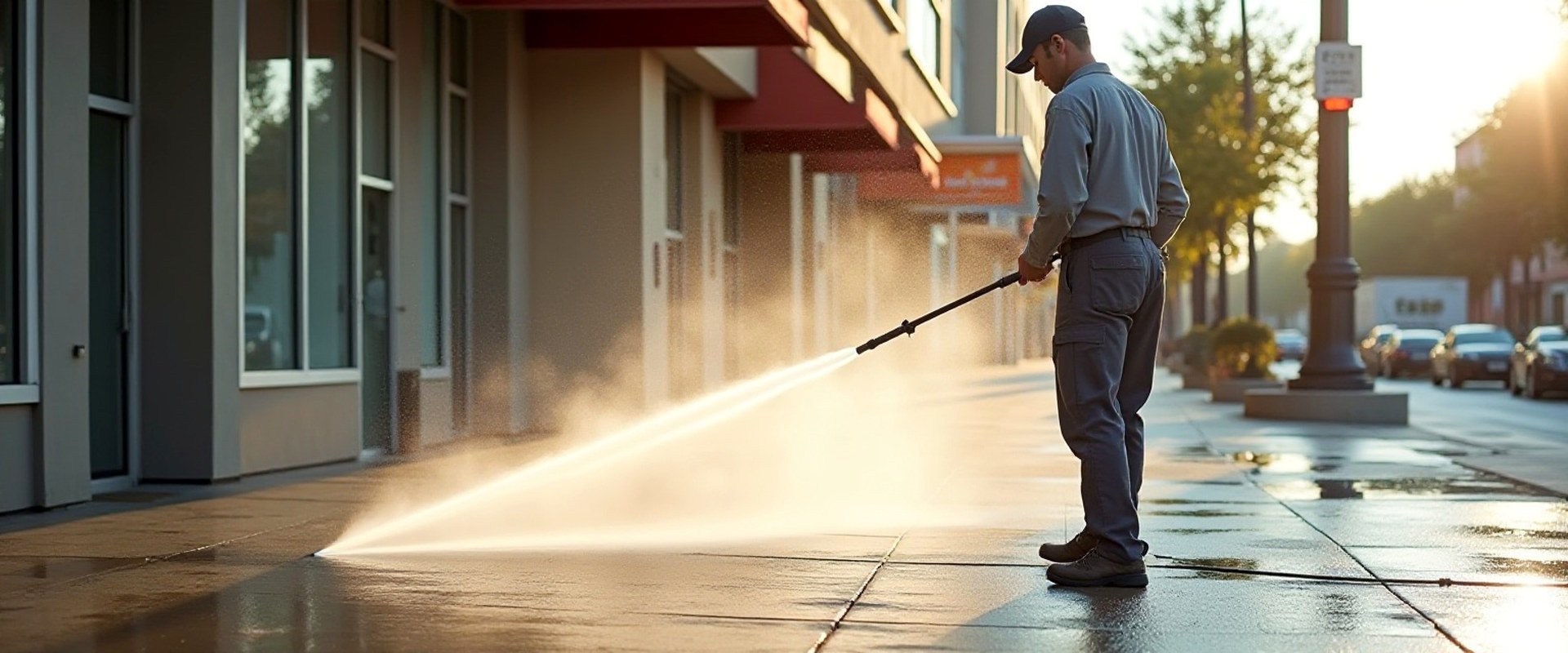
Commercial pressure washing in Houston is about more than curb appeal. A gray, gum-spotted entry tells customers something before they reach the door, a greasy dumpster pad draws flies and inspectors, and a slick walkway is a hazard. The right company cleans all of it and also knows where the dirty water is allowed to go.
Houston Power Washing Pro is a free phone line for business owners and property managers, not a cleaning contractor. Call (832) 662-4107, describe the property, and the automated assistant puts you through to an independent local pressure washing company. That company walks the site, prices it, does the work and bills your business directly.
What is commercial pressure washing?
It is exterior cleaning for business property: the concrete, masonry, glass storefronts, metal canopies and pavement that customers and staff use every day. Three things set it apart from washing a house.
- Size and access. A strip center sidewalk or a parking deck covers far more ground than a driveway, and the work often has to fit around open hours and parked cars.
- What is on the surface. Restaurants, lube shops and car washes deal with cooking grease, motor oil and food waste, not just mildew and pollen. Grease needs the right detergent and often hot water, not just pressure.
- Where the water goes. On a commercial site, wash water usually has to be contained and recovered rather than left to run down the curb. In Houston, grease work also brings a city permit into the picture.
Commercial properties and what each one usually needs
- Retail and strip centers Entry walks with gum and spilled drinks, storefront glass frames, columns, and the dark band of grime where the sidewalk meets the building.
- Restaurants and drive-thrus Grease around back doors and the dumpster enclosure, food spills in the drive-thru lane, and stained concrete under the menu board.
- Offices and medical buildings Building washing for stucco, brick or tilt-wall panels, plus entrances and ramps that patients and visitors use daily.
- Apartment and condo common areas Breezeways, stairs, pool decks, mail kiosks and the trash corral, often scheduled building by building.
- Parking lots and garages Oil drips in parking stalls, tire marks, and the stained ramps and stairwells of a parking deck.
- Warehouses and loading docks Dock aprons, truck bays and the tilt-wall face that faces the street, where diesel soot and dust settle.
Houston's rules on grease and wash water
The storm sewer is for rain. Chapter 47 of the City of Houston Code of Ordinances makes it an offense to put any discharge into the city's storm sewer system that is not made up entirely of storm water. Grease, detergent and grime rinsed off a parking lot fall outside that.
Grease areas need a permitted washer. The Houston Health Department's Special Waste program tracks fats, oils and grease. Its list of special waste generators includes restaurants, car washes, lube stations, laundromats, dry cleaners and any site with a grease trap or interceptor. Its guidance says those businesses may only use a pressure washing company holding a current Health Department pressure washer permit and equipped to collect all of its wash water.
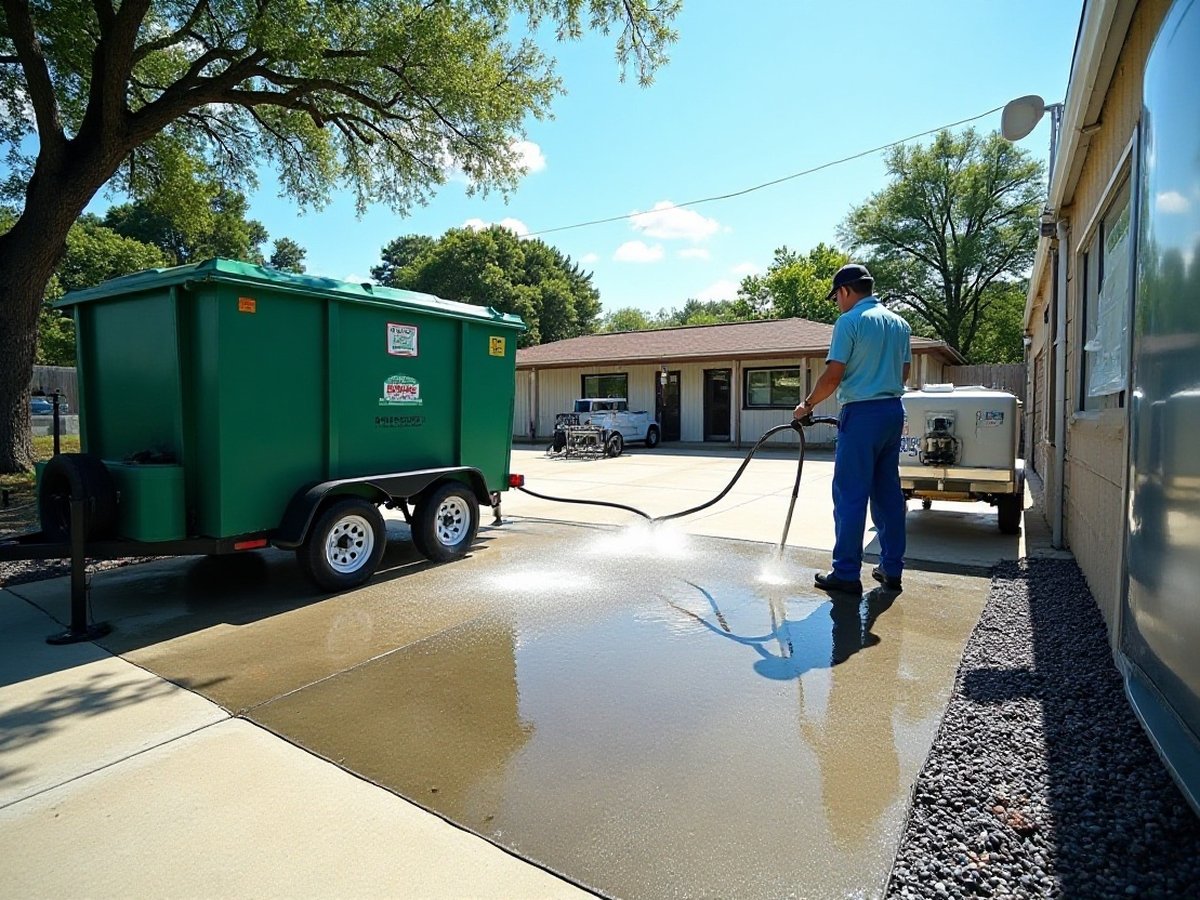
To get that permit, the application says all of a company's equipment (booms, mats and recovery systems) must be tested by the City of Houston to make sure wastewater is recovered and storm drains are protected. It also asks for proof of financial responsibility for each vehicle and trailer and for the company name and phone number on both sides of the vehicle.
In the City of Houston, companies that wash restaurant and commercial grease areas need a Houston Health Department pressure washer permit. Ask the company you are matched with whether it holds one, and ask to see it if your property has a grease trap or a dumpster pad.
Health inspectors look at more than the kitchen. Department guidance says dumpsters and compactors must sit on a smooth, nonabsorbent surface such as concrete or machine-laid asphalt, and inspectors check the dumpster, rendering bin and the area around them. A clean pad is part of passing that look.
Outside city limits the details change, but the idea does not. In unincorporated Harris County, around places like Spring, county stormwater rules allow routine pavement washing only without detergents, other chemicals or heat. Sugar Land's stormwater ordinance lists water containing detergents or chemicals as a prohibited discharge, and Missouri City runs a hotline for reporting illicit discharges. A good commercial company plans containment for the city it is working in.
How a careful commercial crew handles runoff
You do not need to supervise the equipment. These are the things worth watching for, drawn from EPA guidance on outdoor washing and from state agency guidance on mobile power washing.
- Drains are blocked or covered first. Storm inlets near the work area get covered with mats or plugs before any water hits the ground.
- The work area is bermed. Rubber berms, water-filled tubes or sandbags hold wash water where it can be picked up.
- Water is vacuumed up, not swept to the curb. A recovery system pulls the water into a tank on the truck or trailer.
- Collected water goes somewhere approved. That means a sanitary sewer connection the treatment plant has allowed, or a licensed hauler. Houston Public Works handles requests to discharge washdown water to the sanitary sewer.
- Grease is cleaned, not moved. Hot water and the right degreaser break oil down so it can be recovered, instead of pushing it across the lot.
Safety, slips and first impressions
Shaded entries, ramps and pool decks around Houston grow a film of algae in the humid months, and drive-thru lanes collect grease that gets slick in rain. OSHA's rule on walking and working surfaces (29 CFR 1910.22) requires employers to keep those surfaces clean and free of hazards such as spills and leaks. Washing is not a substitute for a safety program, but a slick back-door walk or loading ramp is a good reason to put cleaning on the calendar.
Appearance matters too. Gum, drip lines under the awning and a green north wall read as neglect, even when the inside is spotless.
Planning around your business hours
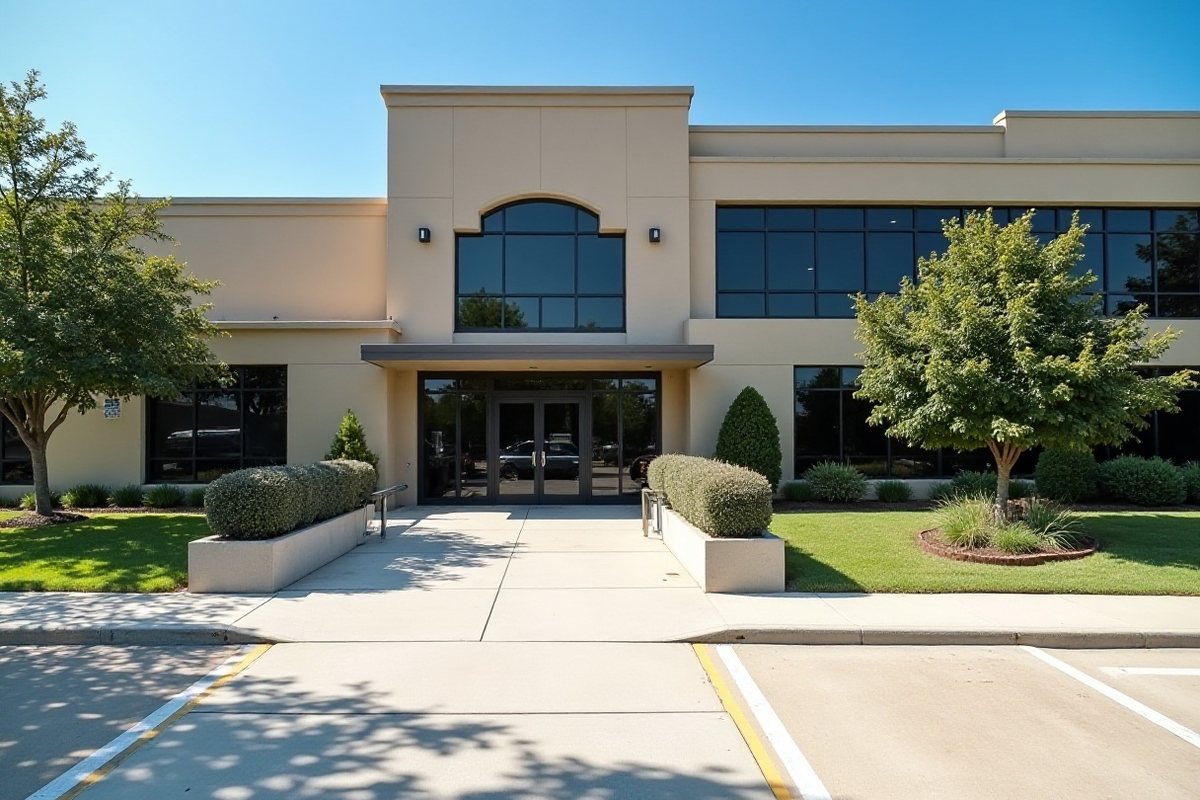
Most businesses do not want wet concrete, hoses and equipment between customers and the front door. Many commercial properties schedule washing early in the morning, in the evening or on a closed day. Near homes, the City of Houston's noise rules also come into play, so not every time slot will suit every site. Ask about timing when you call, and confirm the agreed window with the company in writing.
A few things make scheduling smoother:
- Tell the company which areas must stay open, such as one entrance or the drive-thru lane.
- Say where the nearest water spigot is and whether the company may use it.
- Mention any grease trap, dumpster enclosure or parking deck, since those change the equipment needed.
Questions to ask before you sign
| Ask this | Why it matters |
|---|---|
| Do you hold a Houston Health Department pressure washer permit? | Required for restaurant and commercial grease areas in the City of Houston, and it means the recovery equipment has been tested. |
| How will you keep wash water out of the storm drains? | Discharging anything other than storm water into the city storm sewer is an offense, and the runoff starts on your property. |
| Can you show proof of liability insurance? | High pressure can strip paint, scar soft stone or push water past door and window seals. You want to know a mistake can be paid for. |
| Can you list the price by area? | Sidewalks, dumpster pad, building walls and lot on separate lines make bids easy to compare and easy to scale back. |
| Which surfaces get soft washed? | Stucco, painted walls, signage and storefront frames need low pressure, while plain concrete can take more. |
| Will there be sales tax on the invoice? | Commercial cleaning in Texas may be subject to sales tax. The company can explain how its invoice is set up. |
What happens when a business calls the line
The line is answered by an automated assistant at any hour. Because the number also takes roofing and air conditioning calls, it first asks which one you need. Then it asks about your property: for example, "a two-unit strip center, front sidewalk and the dumpster pad out back," or "a restaurant drive-thru lane and grease area." Your call is transferred to an independent, owner-run commercial pressure washing company that hears that summary before picking up. If it is on another job, your name, number and request are passed along so it can return the call.
From there, the business relationship is between you and that company. It may visit the site before giving a price, especially for grease areas or a parking garage. Houston Power Washing Pro does not quote, schedule or supervise the work and does not charge you.
How this line works: Houston Power Washing Pro is a free phone line, not a pressure washing company. It connects you with an independent local pressure washing company, which inspects, quotes, does the work and is paid by you directly. Houston Power Washing Pro never charges callers. It may be paid a referral fee by the companies it connects callers with. How it works.
Commercial work that goes with it
A commercial wash often overlaps with other services. Oil-stained parking stalls are covered on the oil and rust stain removal page. Stucco and siding on an office or apartment building need the gentler method described under house washing and soft washing. For plain concrete walks and drives, see driveway and sidewalk cleaning. Before you collect bids, the guide to getting a pressure washing quote and the explainer on power washing vs pressure washing (hot water versus cold) are worth a read.
Related pages
- Oil and Rust Stain Removal
- House Washing and Soft Washing
- Driveway and Sidewalk Cleaning
- How to Get a Pressure Washing Quote
- Power Washing vs Pressure Washing
- Spring
- Sugar Land
- Missouri City
Commercial pressure washing across greater Houston
The line takes calls from businesses inside the City of Houston and in the suburbs around it, from The Woodlands down to Sugar Land. Rules on runoff vary by city and county, so mention where the property is when you call.