
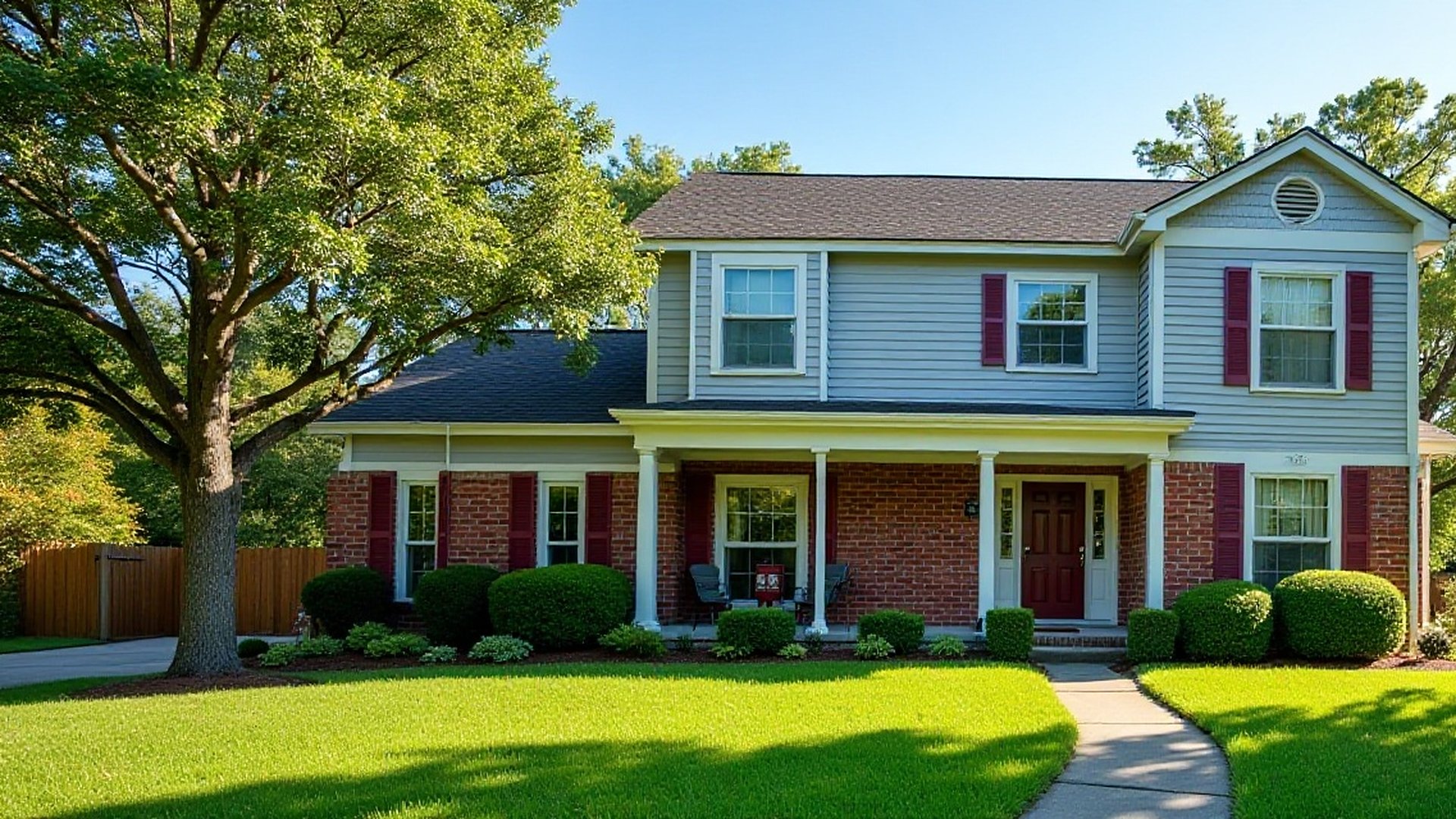
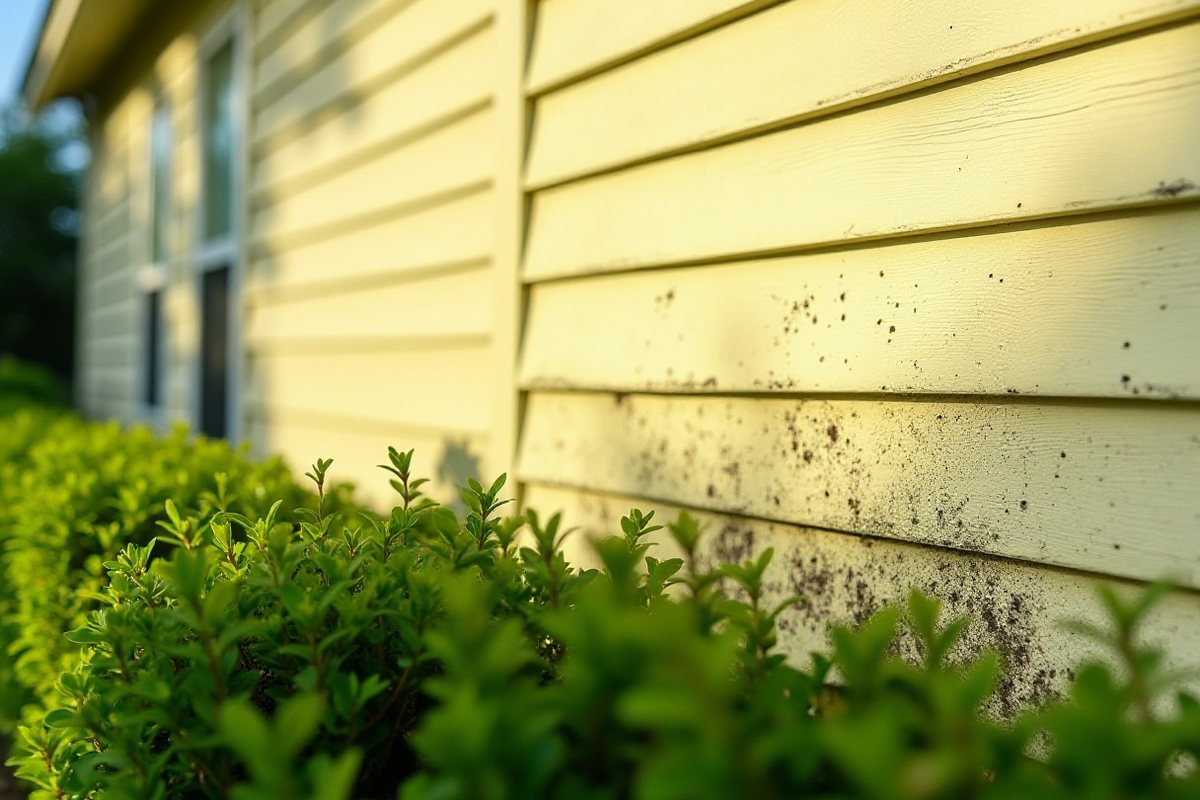
House washing in Houston is less about dirt and more about biology. The film that turns a north wall green or leaves black trails under the gutters is living growth, mostly mildew and algae, and it comes back every humid season. Soft washing kills it at the root with a cleaning solution and rinses it off gently, so the siding, paint and seals around the windows come through intact.
Houston Power Washing Pro is a free phone line, not a washing business. You call, an automated assistant asks what needs cleaning and how big the house is, and the call is passed to an independent, owner-run local company that soft washes homes. That company sees the house, prices it, does the wash and bills you. The line never charges you anything.
Why Houston houses turn green
- Wet air Average morning humidity in Houston sits close to 90 percent. Kansas State extension material says mold grows readily once relative humidity passes about 70 percent.
- Warm months Molds do best roughly between 77 and 86 degrees Fahrenheit, which covers much of a Houston year.
- Rain National Weather Service normals put Bush Intercontinental at about 52 inches a year, so walls rarely stay dry for long.
- Still air and shade Purdue Extension notes mildew is most common on walls behind trees and shrubs, where air cannot move.
What is soft pressure washing?
People search the phrase "soft pressure washing" because they have heard both terms and are not sure how they differ. Here is the short version. Pressure washing relies on force: a tight, fast stream of water knocks grime loose. Soft washing relies on chemistry: a cleaning solution goes on at low pressure, sits long enough to kill mildew, algae and lichen, then gets rinsed away at about the strength of a garden hose.
Angi describes soft washing as the method for delicate surfaces such as painted wood, vinyl, stucco, brick and roofing, and pressure washing as the tool for hard surfaces like concrete. That split matters on a house, because most of what you see from the street is the delicate kind. A house wash done the right way is mostly soft washing, with higher pressure saved for the driveway and walks.
There is a second benefit. Blasting a green wall clean with water alone removes what you can see but leaves the roots of the growth in the texture of the siding, so the color creeps back quickly. A solution that actually kills the growth tends to keep the wall cleaner for longer.
| Exterior | What the maker or trade group says | What to expect from a good house wash |
|---|---|---|
| Vinyl siding | The Vinyl Siding Institute says mild soap and a garden hose usually do it, warns against spraying upward, and notes some siding makers advise against power washing entirely. | Soft wash, spray aimed level or downward, extra care near outlets, vents and light fixtures. |
| Fiber cement (such as Hardie board) | James Hardie says not to use a high-pressure power washer and to clean from the top down. | Low-pressure application, rinse working down the wall, no wand held tight to the boards. |
| Stucco | Lowe's guidance favors a hose and soft brush because hard spray can crack the surface and drive water behind it. | Solution does the cleaning; hairline cracks pointed out to you before the wash starts. |
| Brick and painted trim | Angi lists both among surfaces suited to soft washing. | Gentle rinse that leaves mortar joints and paint alone. |
How a soft wash house cleaning usually goes
- A walk around first. The company notes the siding type, loose boards, cracked stucco, failing caulk and anything fragile near the walls.
- Plants get protected. Beds and shrubs along the foundation are soaked with plain water, and delicate plants may be covered.
- Solution goes on low and slow. It is applied from the bottom of each wall upward so it does not streak, and given time to work.
- A gentle rinse top to bottom. Windows, soffits and trim are rinsed along with the walls, and the plants get another soaking.
- A final look together. Any missed spot under an eave or behind the air conditioning unit is easier to fix while the crew is still there.
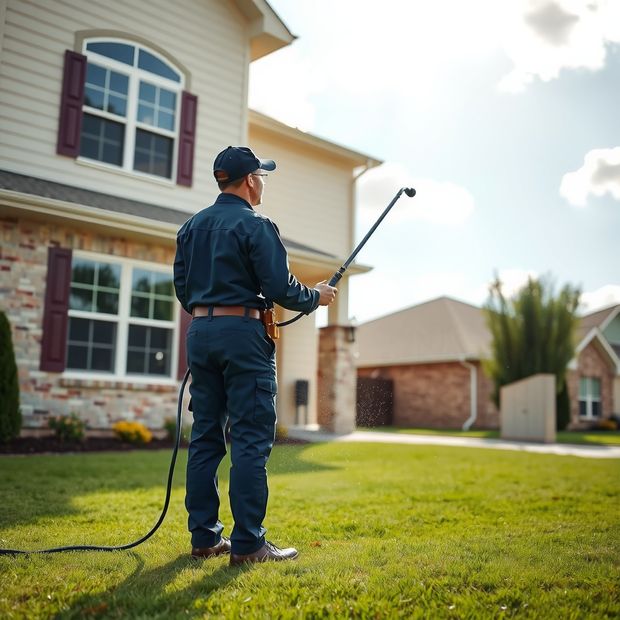
Got a deed restriction letter about mildew?
You are far from alone. Sugar Land's largest association, First Colony, publishes a Top Ten of the deed restriction problems it cites most often, and mildew, mold and staining on houses, fences and driveways made that list. In Pearland, the recorded architectural guidelines for Shadow Creek Ranch require any paint used on stucco to contain a mildew retardant, which tells you how seriously associations there take the problem.
Texas Property Code section 209.006 generally requires an association to send written notice by certified mail and give a reasonable chance to fix a curable violation before it can fine you. If you have a letter in hand, mention the deadline when you call so the company you are connected with knows the timing matters.
House washing questions worth asking before you say yes
The company you speak with sets its own price and its own method, so a few direct questions will tell you a lot.
- "Will you soft wash the siding, or use high pressure?" Anything other than soft washing on vinyl, fiber cement, stucco or painted wood deserves a follow-up question.
- "What do you do to protect my plants?" Listen for pre-soaking, covering delicate beds and a thorough rinse afterward.
- "Is the price for the whole house, or wall by wall?" Find out whether gutters, the porch ceiling, the fence or the driveway are included or extra.
- "Can I see proof of liability insurance?" Water forced behind a panel or into a light fixture is rare with a careful crew, but you want coverage if it happens.
- Call any hourAn automated assistant answers (832) 662-4107, day or night, and asks which service you need.
- Describe the jobSay what needs cleaning and roughly how big it is. A house, a driveway, a roof, a storefront.
- Get put throughYour call goes to an independent, owner-run local pressure washing company, which hears a short summary first.
- Deal with them directlyThat company inspects, quotes, does the work and is paid by you. If it is out on a job, it calls you back.
How this line works: Houston Power Washing Pro is a free phone line, not a pressure washing company. It connects you with an independent local pressure washing company, which inspects, quotes, does the work and is paid by you directly. Houston Power Washing Pro never charges callers. It may be paid a referral fee by the companies it connects callers with. How it works.
Houses near tall trees need more attention
A house under heavy canopy stays damp longer after every rain. The Woodlands is the clearest example. Its 2025 forestry management plan lists pines and oaks overhead with magnolia, dogwood and crepe myrtle in the middle layer, so many lots get very little direct sun on the walls. Homes there tend to grow mildew on shaded walls and collect pollen on siding each spring. If you live in The Woodlands, Sugar Land or Pearland, the area pages explain local HOA rules and conditions in more depth.
A house wash pairs well with other surfaces
Once the walls are clean, a dark roof or gray driveway stands out more than it did before. Many homeowners book the house along with roof cleaning, gutter brightening or driveway cleaning so everything matches. Ask the company to price each part separately so you can choose. To understand what drives the total, read how much pressure washing costs, and for the vocabulary question, power washing vs pressure washing.
Not sure whether your siding is vinyl, fiber cement or painted wood? You do not need to know. Describe the house when you call, and the company you are put through to will figure out the right method.