Driveway Cleaning
Four different things stain a driveway and they need four different treatments. Work out which one you have before you call and you will not waste a visit.
 Call 832-662-4107
The cheapest visible improvement most houses can buy
A driveway is the largest single surface most people see when they look at a house, and it is the one that greys most quietly. It happens slowly enough that owners stop noticing — until it is cleaned, and the difference against the neighbour's is obvious.
It is also the cheapest exterior work by area, because concrete is the one surface that genuinely wants pressure.
What is actually on it
Four different things, and they need four different treatments. Identifying yours before you call saves a wasted visit.
| What you see | What it is | What it needs |
|---|---|---|
| Even grey dulling | Embedded dirt and road film | Pressure with a surface cleaner |
| Green or black, slick underfoot | Algae, usually in shade or where water sits | Cleaning solution, then pressure |
| Orange fanning out from one point | Rust from iron in irrigation water | A masonry rust remover. Pressure will not touch it |
| Dark, greasy, roughly car-shaped | Oil | Degreaser and dwell time, or a poultice if old |
Why a surface cleaner matters
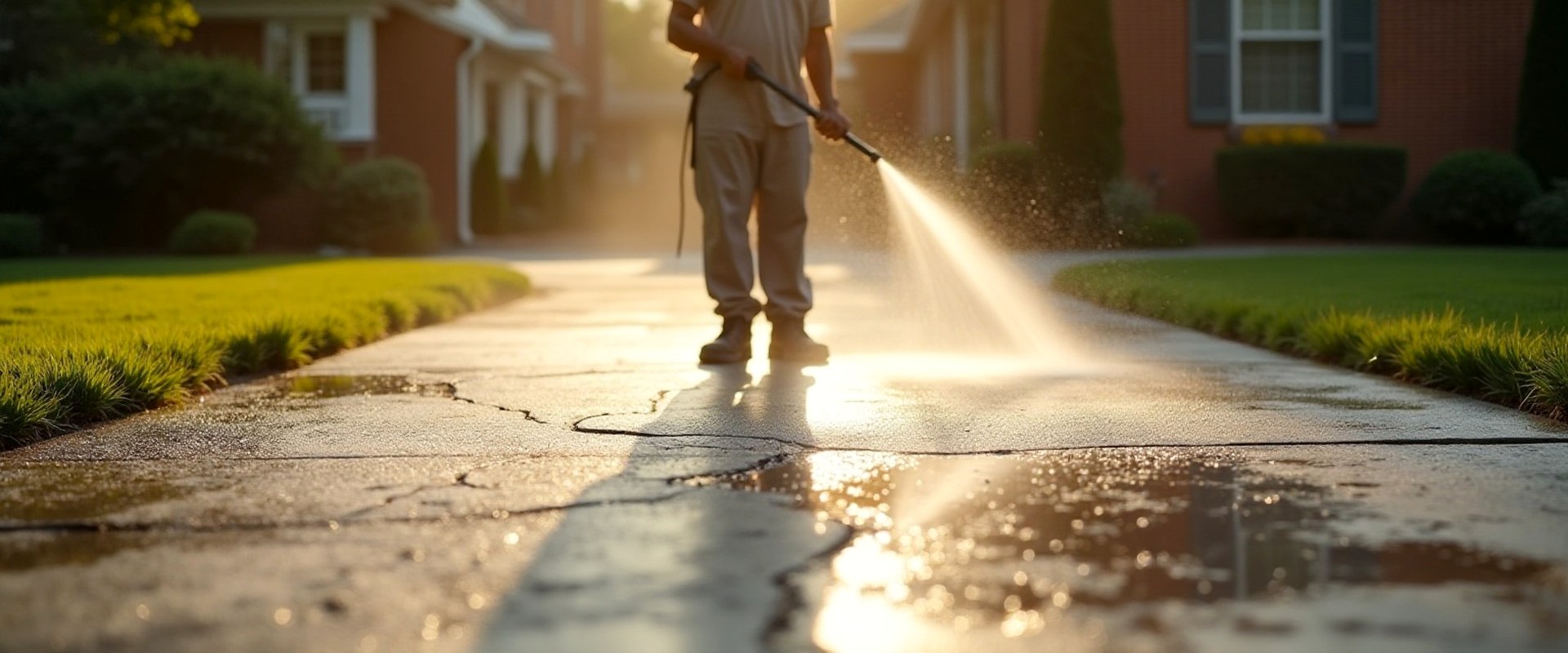
A wand alone leaves stripes. Every pass overlaps unevenly and the driveway ends up with a zebra pattern that is more noticeable than the dirt was.
A surface cleaner is the round attachment that spins two jets under a housing, covering an even width at consistent pressure. It is faster and the result is uniform. If someone is quoting a large driveway and plans to do it with a wand, ask why.
Striping is the single most common complaint after a cheap driveway clean, and it is almost impossible to fix afterwards — the only remedy is cleaning the whole slab again more aggressively, which takes more off the surface.
What is usually not in the quote
This is where two quotes for the same driveway end up hundreds of dollars apart.
- The apron, the section between the sidewalk and the street.
- The walkway to the front door.
- The front porch or entry.
- Stain treatment for rust or oil, almost always priced separately.
- Sealing afterwards, which is optional and a different job.
Ask for the quote itemised by section. Then two quotes are actually comparable.
Sealing: worth it or not
Sealing a driveway after cleaning slows how fast it re-absorbs oil and dirt, and makes the next clean easier. It costs roughly as much again as the cleaning, and it needs redoing every few years.
Worth it if you have recurring oil stains, decorative or stamped concrete, or you have just spent real money removing something difficult. Probably not worth it on a plain slab that greys slowly and cleans up easily.
How often
Once a year suits most driveways. Shaded sections that go green need it sooner; open driveways in full sun can stretch longer. If one patch keeps returning ahead of the rest, the cause is standing water rather than cleaning frequency — look at where the slab has settled.
Call 832-662-4107