Deck Cleaning
A deck is the surface most often ruined by cleaning it, and the damage does not show on the day. Here is what happens, what composite needs instead, and what has to be right if you are staining afterwards.
 Call 832-662-4107
Wood is the surface most often ruined by cleaning it
Concrete forgives pressure. Wood does not, and the damage is easy to miss because it looks fine on the day.
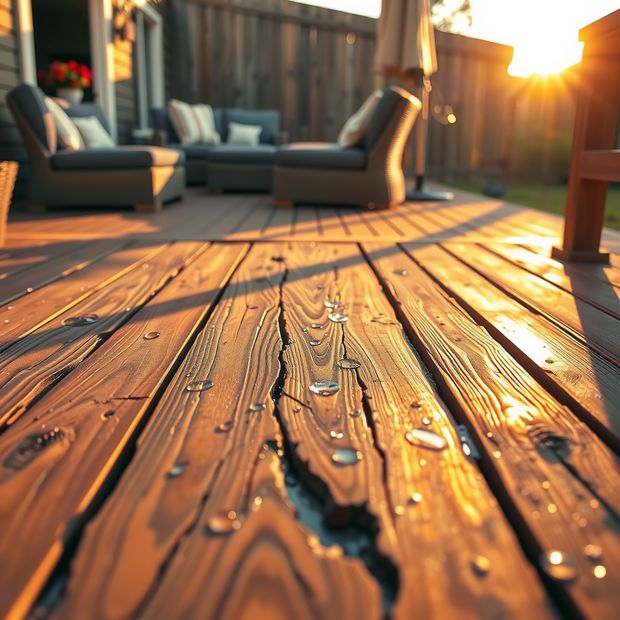
Timber is made of alternating hard and soft growth rings. Too much pressure tears out the soft summer growth between the rings, leaving the harder grain standing proud. The result is a furry, raised surface. It looks clean for a few weeks, then it greys faster than before, because all that roughened fibre holds water.
If your deck has been cleaned before and now feels slightly fuzzy underfoot or catches on a sock, the grain has been raised. That needs sanding rather than another wash, and washing it again will make it worse.
Composite is not maintenance free
Composite decking was sold as the surface you never have to look after. In practice it does not rot and it does not splinter, but it still grows mould — the wood flour in the composite is organic and holds moisture in shaded, poorly drained spots.
It also has a manufactured surface that can be permanently marked by high pressure, and unlike wood it cannot be sanded back. The safe approach is the same as siding: a cleaning solution at low pressure and patience.
Cleaning before staining
If the plan is to stain or seal afterwards, the cleaning has to do two things rather than one: remove the growth, and open the wood enough to accept the finish.
- Old finish has to come off. Stain applied over a failing previous coat peels with it.
- The wood must dry properly first. Two days minimum in humid weather, longer if it has been damp. Stain applied to wet wood will not cure and will look blotchy.
- A brightener is often used after cleaning to restore the colour and neutralise what was applied. Ask whether it is included — it is what stops freshly cleaned wood looking washed out.
The parts people forget
| Area | Why it matters |
|---|---|
| Between the boards | Debris packed in the gaps holds water against the board edges, which is where rot usually starts |
| Underside of the rails | Shaded and rarely cleaned, so growth is usually worst there |
| Where the deck meets the house | Debris collects in the joint and holds moisture against the ledger board, which is a structural piece |
| Steps | The most used and most slippery part. Worth its own attention |
What to ask
- What pressure on the boards? Low. If the answer sounds impressive, keep calling.
- Is a brightener included? Particularly relevant if you are staining afterwards.
- How long before I can stain? Anyone who says straight away has not thought about it.
- Is the underside of the rails and between the boards included?